Let’s be honest: Search isn’t what it used to be.
Gone are the days when ranking on Google was the only goal. Today, AI is rewriting the rules ChatGPT answers questions before you finish typing, Perplexity digs up insights you didn’t know you needed, and Google’s AI Overviews are reshaping how people discover brands. If you’re still treating SEO like it’s 2015, you’re already falling behind.
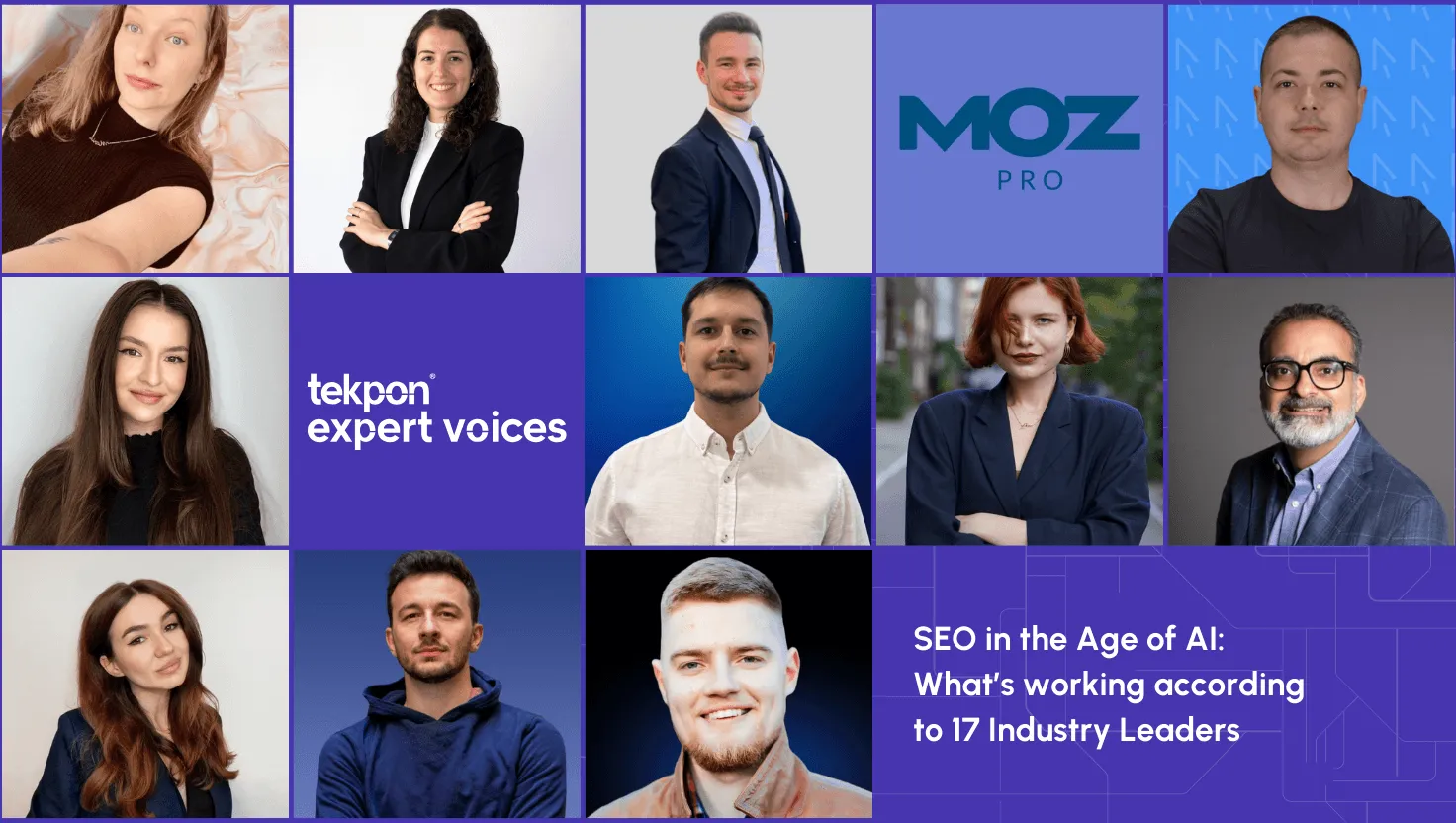
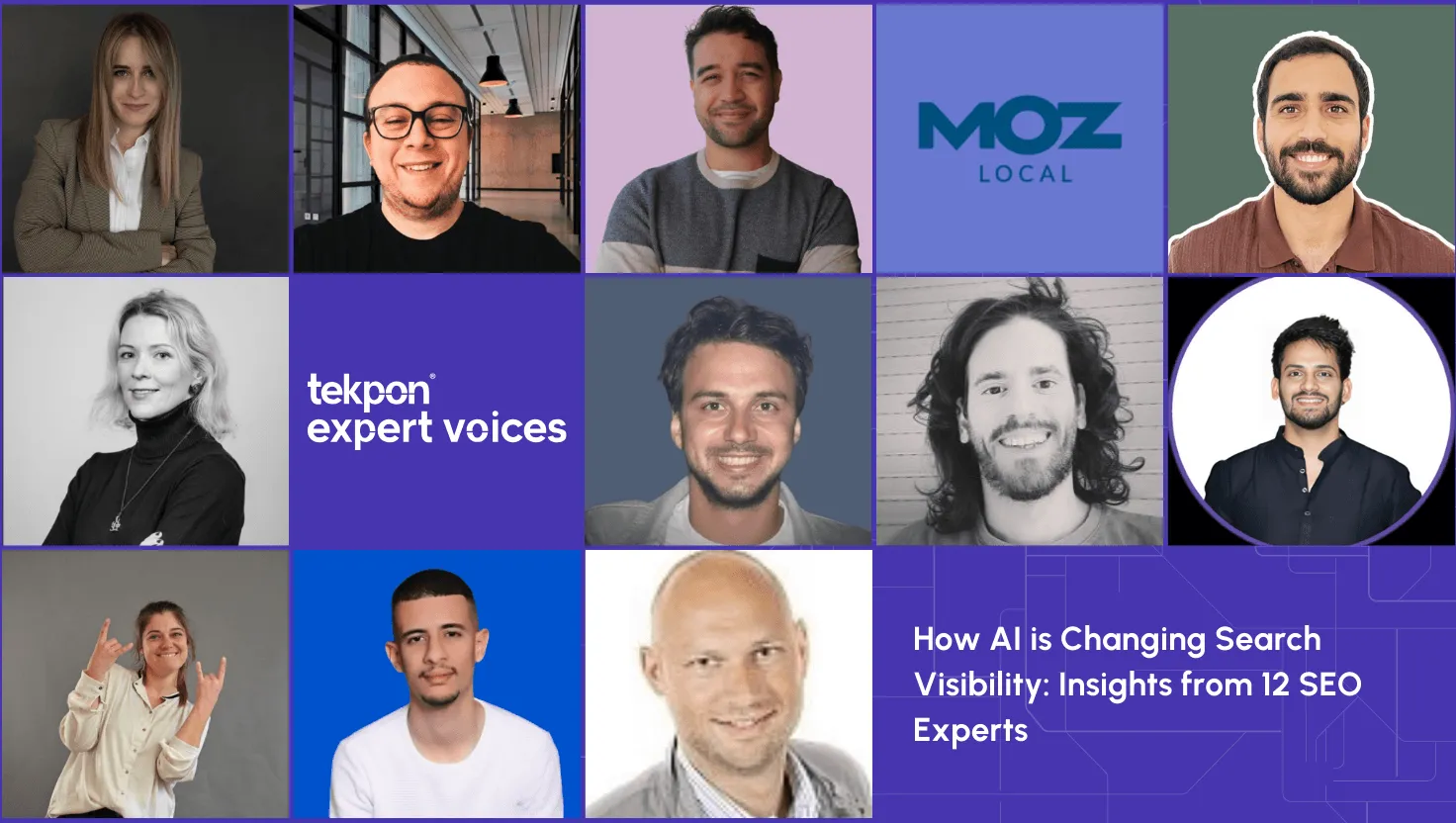
But here’s the good news: This isn’t a crisis it’s an opportunity. To find out how the best in the business are adapting, we asked 10+ top SEO experts the people actually doing the work to share their real-world strategies. No fluff. No hype. Just practical insights on how to stay visible in an AI-driven world.
What did we learn? AI isn’t killing SEO it’s forcing us to get smarter. The brands winning today aren’t just optimizing for algorithms; they’re optimizing for trust, clarity, and real human connection. And the best part? You don’t need a PhD in machine learning to make it work.
Ready to see how? Let’s dive in.
Search Has Always Been Bigger Than Google, Now We Have to Act On It
Google’s dominance made it easy to focus solely on its algorithm for years. But AI is changing that by pulling answers from platforms like Reddit, YouTube, and LinkedIn. This means brands must now establish a presence across multiple platforms to stay visible.

@
Spicy Margarita
This isn’t about throwing out what works it’s about expanding where and how you apply those fundamentals. The brands that succeed will be those that maintain strong SEO roots while adapting to new platforms and behaviors.
In the Age of AI Content, Originality and Backlinks Are Your Competitive Edge
AI has made content production easier, but that also means originality is more valuable than ever. The real differentiators now are unique, experience-based insights and high-quality backlinks both of which are hard to replicate at scale.

AI is making content production nearly free. We’re already at the stage where you can replicate anyone’s voice at scale. The tech is here, and it’s only getting cheaper. When everyone can produce the same quality content at the same speed, content stops being a competitive advantage.
So what actually differentiates you?
Two things: the unique, experience-based additions only you can make to your content, and backlinks. Both are hard to replicate at scale. That’s exactly why they matter.
Structure matters more than ever, too. LLMs don’t read like humans. They parse content in chunks and pay disproportionate attention to the top of the page.
Brand mentions, positive sentiment in reviews, and consistent user experience signals also carry real weight in how AI engines decide who to surface.
The brands that come out ahead are the ones putting real experience into what they publish and earning links and mentions that can’t be faked at scale. If you need help with that, feel free to reach out.
The focus should be on creating content that provides real value, not just volume. Authenticity and expertise will always stand out in a sea of AI-generated content.
Speak Like a Human, Structure Like a Machine
The best approach to AI-era SEO is simple: think like a human, but structure like a machine. Clarity and structure are what both humans and AI reward, making it easier for brands to be understood and trusted.

@
Tallinn School of Economics
The brands that succeed will be those that balance human connection with technical precision. Content that is both emotionally engaging and structurally sound will perform best in this new landscape.
From SERP Rankings to AI Visibility: A Strategic Shift
Innowise has shifted its focus from traditional SERP rankings to broad AI visibility, as potential clients now use AI tools like ChatGPT and Perplexity to evaluate partners. High-quality leads are already coming from these AI systems, proving that being cited by an LLM is a critical conversion factor.

@
Innowise Group
This approach requires thinking beyond traditional SEO tactics. It’s about creating content that positions your brand as the go-to source for answers, whether those answers come from search engines or AI systems.
GEO ≠ SEO: Understanding the Fundamental Shift
The shift to AI-driven search is fundamentally different from traditional SEO. While SEO focused on rankings, AI Search Optimization is about becoming a trusted source that AI systems cite whether in ChatGPT, Google AI Overviews, or other platforms.

@
OtterlyAI
GEO ≠ SEO. The sooner teams internalize that, the better.
Despite what some SEO gurus have been claiming for over a year now, this isn’t SEO anymore. Let me tell you why. Traditional SEO optimized for rankings. AI Search Optimization (GEO/AIO/LLMO) is about something else entirely: becoming the source AI Search Engines trust enough to cite, and this goes beyond SEO.
Users today interact with ChatGPT, Google AI Overviews, Perplexity, and Gemini before they ever touch a search result. Those systems don’t rank pages, they synthesize answers and reference sources. That single shift changes the entire optimisation model:
- Domain Authority mattered a lot in SEO → AI Search levels the playing field
- Backlinks mattered in SEO → A brand mention (without links) is enough in GEO
- A website with only 7 pages can still be cited among the big brands in GEO
- From rankings → to citations and brand mentions
- From keyword optimisation → to entity authority and reference value
- From only tracking organic human traffic → In GEO we track AI bot crawls
- Social media and multimodal content is becoming more important than just text.
So YOU tell me, is this still SEO?
Or are people just stuck with a romanticized version of the past?
A recent OtterlyAI YouTube Study on 100 million AI citations proved that your own website’s content isn’t the main driver anymore. External signals already account for 82% of AI citations.
Reddit and YouTube represent 78.2% of all social media citations in AI search. Of YouTube citations, 94.3% come from long-form video, not Shorts. And here’s the one that should stop every SEO in their tracks: popularity metrics like views and likes show near-zero correlation with citation frequency. AI Search isn’t amplifying what’s popular. They’re referencing what’s useful.
That tells you everything about where optimization needs to go. Structure content so AI can extract a clear answer. Build entity authority across platforms, not just your website. Publish reference-grade material that explains, defines, and compares. And start tracking where your brand appears in AI-generated answers, not just where you rank.
SEO isn’t dying, it’s changing and expanding. And feel free to call it what you will. Some people started calling it Search Everywhere Optimization, which is fair. But the centre of gravity has shifted from rankings and traffic to citations and inclusion. The teams that adapt early won’t just survive this transition. They’ll own it.
One thing is sure: The SEO game’s changed, have you?
This requires rethinking how we approach optimization. Instead of chasing rankings, the focus should be on building authority and relevance that AI systems recognize and reference. The goal is to be the source that AI trusts enough to cite in responses.
Turn Business Value Into AI-Optimized Content
The best way to approach AI-era SEO is to start with your business’s real value. Look at where you consistently deliver value whether in onboarding, customer success conversations, or unique product features and turn those into content that answers real user questions.

@
Driversnote
The world is waiting for your take..
SEO used to be simple: keywords, density, H1s, meta descriptions every paragraph a mini checklist. Now, with AEO (Answer Engine Optimization) and GEO (Generative Engine Optimization), search understands context and conversational intent. Exact phrases matter less. The real question is: how do you capture demand when search isn’t a fixed query anymore?
Start inside your own business. Look at where you consistently deliver value: onboarding flows, epic customer success conversations, unique product features, even interesting sales calls.
Behind each is a pain point or opportunity. Your job is to turn the feature into a pain point and find the prompt behind it. There are plenty of tools to help with that.
Once you know the prompts, build content around them but don’t stop at a single blog post. Use AI to amplify across formats and the funnel:
Awareness: blog posts, social snippets, short videos, PR introduce the idea to people who didn’t even know they had a problem. And be part of the content eco system.
Consideration: templates, frameworks, case studies, podcasts help them explore solutions and see your expertise in action. And LLMs love that jazz.
Decision: guides, demos, checklists make it easy to act. And support your sales team or self onboarding at the same time.
Modern tools make this fast. What used to take weeks (or months!) can now be repurposed in half the time across social, video, podcasts, newsletters, and more.
The key is turning a single, viable, business-relevant idea into a multi-format system that meets customers wherever they are consistent, valuable, and human.
This means moving beyond single pieces of content to create interconnected resources. The brands that succeed will be those that repurpose their expertise into multiple formats that serve users at every stage of their journey.
Avoid the Shiny Object Trap in AI-Driven SEO
The hype around AI search engines can be distracting, but the core principles of SEO haven’t changed. Many of the new concepts like GEO and AEO are simply extensions of good SEO practices, not completely new disciplines.

@
Nuelink
Avoiding the “Shiny Object” Trap in AI-Driven SEO
Despite all the hype around AI search engines, traditional search, especially Google, still drives the overwhelming majority of traffic for most websites according to many recent studies.
That’s why companies need to be careful not to fall into the shiny object syndrome and abandon proven SEO fundamentals to chase every new tactic that may or may not work. Many of the concepts being discussed today, such as GEO, AEO, or whatever new acronym, still rely heavily on the same core principles that have always powered SEO. In many ways, these “new” strategies are simply extensions of good SEO practices rather than completely new disciplines.
This doesn’t mean ignoring AI search engines, that would be a mistake, it only means that you need to prioritize your focus according to the current facts, not according to what feels exciting.
AI search changed and is still changing how users interact with information. No doubt about that. People now expect a direct answer rather than navigating through multiple websites to find it. Certain types of generic informational content simply won’t perform the same way before. Because of this shift, I believe companies should prioritize product-led SEO content more than any kind of content strategy. This type of content is not only more likely to convert users, but it also feeds AI systems with accurate context about what your product actually does.
A new responsibility for SEO teams now is managing how AI systems understand their brand. Large language models pull information from many different sources across the web. This means outdated or inaccurate information about a company can easily surface in AI-generated answers. If a potential user asks an AI tool about your product and receives incorrect or misleading information, you may lose that customer before they even visit your website.
The focus should remain on creating content that serves both users and AI systems. This means maintaining accuracy, relevance, and conversion potential in everything you publish.
Search Everywhere: The New Reality of AI Visibility
AI is changing how we measure visibility, as responses vary depending on context rather than appearing in fixed rankings. This means tracking individual keyword positions is becoming less useful, while topical association is growing in importance.

@
Advisable
AI-driven optimization is now part of SEO, but the surrounding environment has changed. Traditional search operated around relatively stable rankings and queries that could be tracked with precision. Large language models introduce a different dynamic. They generate answers probabilistically, which means responses vary depending on context rather than appearing in a fixed order. Prompts are also tokenized, making it difficult to reconstruct the exact prompt path that produced a recommendation.
This changes how visibility can be evaluated. Attribution becomes less precise because the triggering prompt may not be visible and responses can change across interactions. Evaluation therefore shifts away from individual keyword positions and toward topical association. The relevant question becomes whether a brand consistently appears in the information layer surrounding a subject.
In some respects this resembles the early web. Visibility develops through a coherent presence across multiple touchpoints, many of which are not directly tied to revenue. Digital PR, documentation, practitioner discussions, comparison pages, and blog content all contribute to the context that AI systems draw from.
AI models also build their understanding of the landscape from the open web. They do not primarily learn the competitive landscape from market reports. Instead they absorb signals from publicly available material across sites and communities. Product comparisons, practitioner blogs, forums, documentation, and reviews often form part of the evidence base these systems rely on. As a result, visibility increasingly includes being referenced or recommended by AI systems alongside traditional rankings.
Measurement is still adapting to this environment. Because outputs are probabilistic, tracking a single position becomes a weak signal. A more practical approach is to evaluate visibility at the topic level. Instead of asking whether a page ranks for a keyword, the question becomes whether the brand consistently appears within the knowledge layer surrounding that topic.
This shift also reflects a broader pattern in how organizations approach AI. Some expect it to replace large parts of work, while others introduce tools widely without adjusting the surrounding systems. In practice, AI tends to deliver value through the processes, data, and workflows it sits inside.
The same dynamic appears inside companies. If information is fragmented across dashboards, CRMs, and operational systems, AI will simply operate on top of that fragmentation.
SEO therefore remains structurally important. It shapes how information is published, structured, and referenced across the web. Those signals influence both traditional search engines and the generative systems that summarize and recommend information.
The discipline expands rather than disappears. Ranking pages remains part of the work. Ensuring that a brand is present and credible within the broader knowledge environment from which AI systems construct answers becomes equally important.
The fundamentals remain the same. Visibility follows credibility. What has changed is the number of places where that credibility now matters.
This requires a broader approach to SEO that goes beyond traditional rankings. Brands need to establish credibility across multiple platforms and formats to ensure they’re part of the conversation wherever it happens.
Crawlability: The Foundation of AI Visibility
Crawlability remains the foundation of visibility in the AI era. AI systems rely on being able to find, understand, and trust content just like traditional search engines always have.

@
FandangoSEO
At Google Search Central Live in Zurich last December, Google said something that cut through every AI hype cycle in our industry: “AI systems rely on search. There is no such thing as GEO or AEO without doing SEO fundamentals.” One sentence. Everything else follows from it.
That statement validated what we have been building at FandangoSEO for years. Because if AI-powered search depends on crawling and indexing, crawlability is not a legacy concern. It is the foundation of everything that comes next.
2026 is the year the crawl returns to center stage. Not because it ever left, but because AI has exposed how much it depends on it. Google’s own documentation states it plainly: to be eligible to appear as a supporting link in AI Overviews or AI Mode, a page must be indexed and eligible to be shown in Google Search. No crawl, no AI visibility. The same logic applies across every surface, Perplexity, ChatGPT Search, Microsoft Copilot or other Search engines like Youtube. Bing has now launched an AI Performance dashboard inside Webmaster Tools showing where and how content is cited in AI-generated answers, precisely because visibility is no longer only about blue links. Bing Blogs
This is the context behind what we call Search Everywhere Optimization. The idea is not to abandon Google, it remains dominant, but to accept that your audience now searches across multiple AI surfaces simultaneously. Enterprise brands must ask not just “can Google crawl this?” but “can every AI system that might recommend my content actually find it, understand it, and trust it?”
At FandangoSEO, we responded by building an analytics layer that correlates crawl data, server logs, and Search Console signals to surface exactly where that breakdown happens, and which AI bots are reaching your site versus which are not. For our enterprise clients, the conversation has shifted from “how do we rank for this keyword” to “how do we build a content architecture that earns attribution across every channel where customers are searching?”
The brands that win will not be those who optimized for yesterday’s SERP. They will be the ones who treated crawlability and content authority as the same problem, and had the infrastructure to measure both.
Google was right. You cannot skip the fundamentals. You can only build on top of them.
This means technical SEO is more important than ever. The brands that succeed will be those that make their content easy for both humans and AI to discover and understand.
AI in SEO: Precision Over Speed
AI should be used as a precision tool, not just a content production machine. The real value comes from using AI to create deeper, more authoritative content rather than just generating more volume.

@
ROCKA
I have been navigating the SEO landscape since 2007. Over nearly two decades, I’ve
learned one crucial lesson: if you treat SEO as a mere technical craft, you lose. If you treat it
as a strategic engine for revenue and lead generation, you win. We are not witnessing the
death of SEO; we are entering its most sophisticated evolutionary stage yet—one where
quality and relevance are being fundamentally redefined.
1. The Duality of AI: Beyond “Faster Text”
We must stop viewing AI simply as a “text machine.” The revolution is happening on two
distinct fronts:
- Multimodal Content: It is no longer just about the written word. AI allows us to scale and optimize all forms of content from visual assets and video to complex data structures. If you are only focused on text, you are ignoring the vast potential of modern search.
- Substantive Superiority Over Speed: The biggest mistake is using AI solely for “higher output.” The true leverage lies in creating factually superior content. AI enables us to analyze user intent with surgical precision and evaluate data so deeply that our answers reach a level of quality and authority that was previously impossible to achieve manually.
2. Combatting the “Digital Blandness”
In the coming months, the web will be flooded with mediocre, AI-generated content. The
result? A boring, interchangeable “digital mush” found at every corner. Search engines and
users alike will quickly tune out content that lacks unique value.
The decisive competitive advantage will be twofold:
1. Strategic AI Excellence: Success belongs to those who use AI to deliver deeper,
more data-driven, and more substantive answers than the competition.
2. Brand Communication & the Personal Touch: In a world governed by algorithms,
the human touch becomes the most valuable currency. Authentic brand
communication, unique perspectives, and a distinct voice are the only shields against
being replaceable.
3. Conclusion: Personalized Quality is the New Currency
SEO isn’t dead—it has become intellectually more demanding. Search engine evaluation
has tightened progressively since 2007. Today, adaptation doesn’t just mean keeping up with
technology; it means using that technology to become contentually unbeatable.
“For me, AI is not a tool for mass production; it is a precision instrument. Those
who chase only speed produce noise. Those who chase substantive depth and
brand identity will dominate the market.”
The focus should be on quality over quantity. Brands that use AI to enhance their expertise rather than replace it will stand out in an increasingly crowded digital landscape.
Focus on Where Your Customers Actually Search
Before chasing AI brand mentions, it’s crucial to understand where your customers actually search. In many industries, traditional search still drives most discovery, while in others, AI assistants play a bigger role.

@
buildsaaslinks.com
Everyone is talking about getting their brand mentioned by AI. Companies want to appear in ChatGPT answers, Perplexity responses, and AI-generated recommendations with more “branded links.” But very few stop to ask a simple question first: are our customers actually searching there?
Search behavior varies widely across industries. In IT and SaaS, people often combine AI assistants with traditional search when researching tools or solving problems. But in many other markets, discovery still happens mainly through Google.
That’s why AI SEO should start with understanding how your audience searches.
Before chasing AI brand mentions, brands need to look at how their customers find information, which platforms they use, and what influences their decisions. If your ICP primarily discovers brands through Google, there’s no need to overspend on branded mentions or expensive listicles designed purely for AI visibility.
In many cases, traditional link building with relevant placements and natural anchors can still deliver strong results without stretching the budget. AI visibility is powerful, but only when it reflects real user behavior.
The key is to align your strategy with how your audience actually finds information. This means focusing on the platforms and tactics that drive real results for your specific customers.
From Traffic to Intent: How AI is Reshaping SEO Fundamentals
The rise of AI is shifting SEO from a traffic acquisition game to an intent and conversion game. Purely informational content now drives minimal traffic, while content that provides real value original insights, use cases, and experiences is becoming more important.

@
flipsnack.com
My perspective has changed fundamentally over the past three years. Since the launch of ChatGPT, we’ve witnessed one of the fastest shifts in search behavior. Even before AI, Google was introducing SERP features that steadily reduced traffic through zero-click searches. But the widespread adoption of AI chatbots for information discovery, along with Google’s Search Generative Experience (AI Overviews and AI Mode), has significantly accelerated this trend.
This has fundamentally reshaped the traditional content marketing and SEO paradigm. Purely informational content now drives minimal traffic, although it still plays an important role in building a brand’s authority. The content that continues to drive both traffic and conversions has become more sophisticated and harder to produce at a high level, even in an era of massive LLM-generated output. This means original insights, real use cases, tools, and experiences that AI cannot easily replicate.
AI is shifting SEO from a traffic acquisition game into an intent and conversion game. The question is no longer just “How do I rank?” but “How do I become part of the answer?”, whether that answer is delivered by Google (through AI Overviews or AI Mode), ChatGPT, Claude, Perplexity, or another AI interface.
At the same time, SEO is becoming more tightly connected with CRO. With fewer clicks available, every visit needs to be more intentional and more likely to convert. This requires aligning content deeply with user intent and building product-led experiences directly into SEO pages.
Finally, authority is becoming the real moat. AI systems tend to surface and reuse content from sources they trust, which places greater emphasis on brand, consistency, and unique perspectives.
In this new environment, the winners won’t be those who generate the most traffic, but those who create the most value from the visibility they earn.
This means focusing on quality over quantity and ensuring that every piece of content serves a clear purpose in the user journey.
The Content Recession: Why AI Makes Human Judgment More Valuable Than Ever
We’re seeing the consequences of content inflation in real time. With AI tools making content production nearly free, everyone is publishing more but just like economic inflation, this devalues what’s out there. Traffic is harder to earn, attention is harder to keep, and the cost per qualified lead is quietly rising even as output numbers look impressive.

@
HeyReach.io
We’re living through content inflation consequences in real time. With AI content generation tools production costs collapsed, everyone produced more… However, just like with economic inflation, when money is printed without control, everything suddenly gets super expensive.
Traffic is harder to earn, attention is harder to keep, and the cost per qualified lead is quietly climbing while the output number looks healthier than ever.
What follows inflation in economics is recession.
The content recession is already here: the middle has collapsed, ‘good enough’ content has stopped being good enough, and the teams that don’t see it coming are still optimizing for volume while their results quietly erode.
The teams holding up right now made that choice they never outsourced the thinking. They use AI to move faster through the parts that were always mechanical. But the angle, the perspective, the specific way of seeing a problem that makes someone stop and think ‘this person gets it’ that still has to come from a human who actually lived inside the problem they’re writing about.
My honest take is that AI has made the craft of Content production and optimization more valuable, not less because now the only thing that differentiates your content is irreplaceable human judgment.
The keyword still matters, the technical foundation still matters, but none of it saves you if the content couldn’t have been written by anyone other than a bot following instructions.
Adapting doesn’t mean handing the keys to the machine. It means doubling down on the part it will never replicate. SEO in an AI world is exactly what good SEO always was. It just has nowhere left to hide.
This means using AI to handle mechanical tasks while doubling down on what makes content truly valuable: the unique perspective, specific experience, and human insight that can’t be replicated by a machine.
Conclusion
Here’s the truth no one wants to admit: AI doesn’t care about your keyword density. It cares about whether you’re actually useful.
That’s the big takeaway from our experts. Anis Msakni reminded us that search happens everywhere not just Google. Konstantine Ge proved that in a world of AI-generated content, originality isn’t optional it’s your only competitive edge. And Ave Annuk nailed it with her simple but powerful advice: “Think like a human. Structure like a machine.”
So what does this mean for you?
Stop chasing algorithms. AI rewards depth, not just volume. If your content doesn’t answer a real question or solve a real problem, it’s invisible no matter how many keywords you stuff in.
Build trust, not just backlinks. AI systems (and humans) cite sources they believe in. Are you one of them?Meet your audience where they actually search. If your customers are asking ChatGPT for recommendations, you need to be part of that conversation.
The future of SEO isn’t about outsmarting AI it’s about working with it. The brands that win will be the ones that stay human while leveraging AI’s precision. They’ll be the ones that don’t just rank, but resonate.
So ask yourself: Is your SEO strategy built for robots… or for real people?