











Best Compliance Software
What is Compliance Software?
Compliance software is a category of business tools designed to help organizations meet regulatory requirements, manage internal policies, and reduce the risk of violations across legal, financial, and operational domains. These platforms automate tasks like policy tracking, audit preparation, risk assessment, and evidence collection – replacing manual spreadsheets and ad hoc processes that leave gaps in coverage.
The compliance software market reached $35.82 billion in 2025 and is projected to exceed $39 billion in 2026, driven by tightening regulations across data privacy, financial reporting, and cybersecurity. Organizations use compliance management software to address frameworks like GDPR, HIPAA, SOC 2, PCI DSS, OFAC sanctions, and ISO 27001 – often managing multiple frameworks simultaneously from a single platform.
Whether you need a GRC platform for enterprise-wide governance, risk, and compliance management, a specialized tool for healthcare or financial regulatory compliance, or a consent management solution for data privacy laws, the right compliance software depends on your industry, the regulations you face, and your team’s capacity. We review and compare over 100 compliance tools to help you find the best fit based on features, pricing, and real user feedback.
Compare Compliance Software
Filter Software Rankings | Updated on
Sort by
Sponsored (default)
Features
Pricing Options
Deployment
Best For
Reset All
See Results
Open Filters & Sort

Clym
Premium Seller
Verified, optimized for fast response, and a trusted software solution
Clym is the all-in-one digital compliance solution that unifies data privacy, web accessibility, transparency and accountability across 150+ global regulations through intelligent automation and a si...
Learn more about Clym
Copla
Premium Seller
Verified, optimized for fast response, and a trusted software solution
Copla is a compliance automation platform designed to help companies maintain continuous alignment with key cybersecurity and regulatory frameworks, including ISO 27001, SOC 2, NIS2, DORA, PCI DSS, M...
Learn more about Copla
Cookiebot
Premium Seller
Verified, optimized for fast response, and a trusted software solution
Cookiebot is a comprehensive cookie management and consent platform designed to help websites comply with global privacy regulations like the GDPR, ePrivacy Directive, and CCPA. It automates the proc...
Learn more about Cookiebot
Multiplier
Premium Seller
Verified, optimized for fast response, and a trusted software solution
Multiplier is a global workforce platform designed to help companies hire, manage, and pay employees and contractors internationally. It positions itself as the Global Exchange for Work, combining em...
Learn more about Multiplier
TINCheck
Premium Seller
Verified, optimized for fast response, and a trusted software solution
TINCheck is a cloud-based tax identity verification service by Sovos that helps businesses validate taxpayer identification numbers (TINs), employer identification numbers (EINs), and name combinatio...
Learn more about TINCheck
Secureframe is a leading security compliance automation platform that simplifies achieving SOC 2, ISO 27001, HIPAA, and PCI DSS compliance. It offers automated evidence collection through integration...
Learn more about Secureframe
Scytale is an AI GRC platform supported by a team of dedicated GRC experts, designed to help organizations achieve and maintain compliance across more than 80 security and privacy frameworks, includi...
Learn more about Scytale
Saphira is an AI-powered compliance platform designed to streamline safety certification processes for hardware products by automating risk assessments, documentation, and real-time monitoring. It se...
Learn more about Saphira AI
Zenable is an AI-native software governance and compliance platform that embeds directly into the software development lifecycle (SDLC). It delivers automated guardrails, observability, and policy en...
Learn more about Zenable
Kitecyber is a cybersecurity automation platform designed to help businesses streamline compliance, risk, and security operations. It provides an integrated suite of tools for managing cybersecurity ...
Learn more about Kitecyber
Qualio is a cloud-based quality management software designed to help life sciences companies manage and streamline their compliance processes. It provides a comprehensive solution for businesses in r...
Learn more about Qualio
Aikido Security is an application security platform designed to protect code, cloud, and runtime environments within a single developer‑friendly system. It scans repositories, cloud configurations,...
Learn more about Aikido Security
SkyPrep is an intuitive online training platform that enables organizations to create, manage, and deliver training programs with ease. Designed to simplify the process of training employees, partner...
Learn more about SkyPrep
Piwik PRO is a privacy-focused analytics suite that enables organizations to collect, analyze, and activate user data while maintaining full control and compliance with data protection laws like GDPR...
Learn more about Piwik PRO
Carbide is a compliance software designed to help businesses ensure regulatory compliance and manage risk effectively. The software offers comprehensive features to streamline compliance processes, m...
Learn more about Carbide
Scrut Automation is a platform designed to help businesses maintain compliance and manage their information security risks. Scrut emphasizes the importance of staying aware, ahead, and compliant. The...
Learn more about Scrut Automation
Usercentrics is a Consent Management Platform (CMP) that enables companies to acquire, handle, and document user consent across their websites and applications.
The platform is designed to assist bus...
Learn more about Usercentrics
SanerNow by SecPod is a unified cyber hygiene platform designed to prevent cyber attacks and manage security risks and compliance controls. It offers a centralized cloud-based console to secure, moni...
Learn more about SanerNow
Termly is a comprehensive compliance solution designed to assist website owners and app developers in navigating the intricate landscape of data privacy regulations.
Recognizing the growing importanc...
Learn more about Termly
SkynetAccessibility Scanner is an automated website accessibility scanner and monitor that lets organizations manage accessibility through centralized testing, compliance tracking, and ongoing monito...
Learn more about SkynetAccessibility Scanner
of 7
Next Page

Table of Contents
- Types of Compliance Software
- How to Choose the Right Compliance Software
- Key Features to Look for in Compliance Software
- Compliance Software Pricing – What to Expect
- Compliance Software Trends in 2026
- Compliance Software for Small Businesses vs Enterprise
- The Cost of Non-Compliance
- Compliance Software FAQ
Types of Compliance Software
Compliance software is not a single product category – it spans multiple subcategories that address different regulatory domains and business needs. Understanding these types helps you narrow your search to tools that actually solve your specific compliance challenges rather than buying a platform with features you will never use.
GRC Platforms (Governance, Risk, and Compliance)
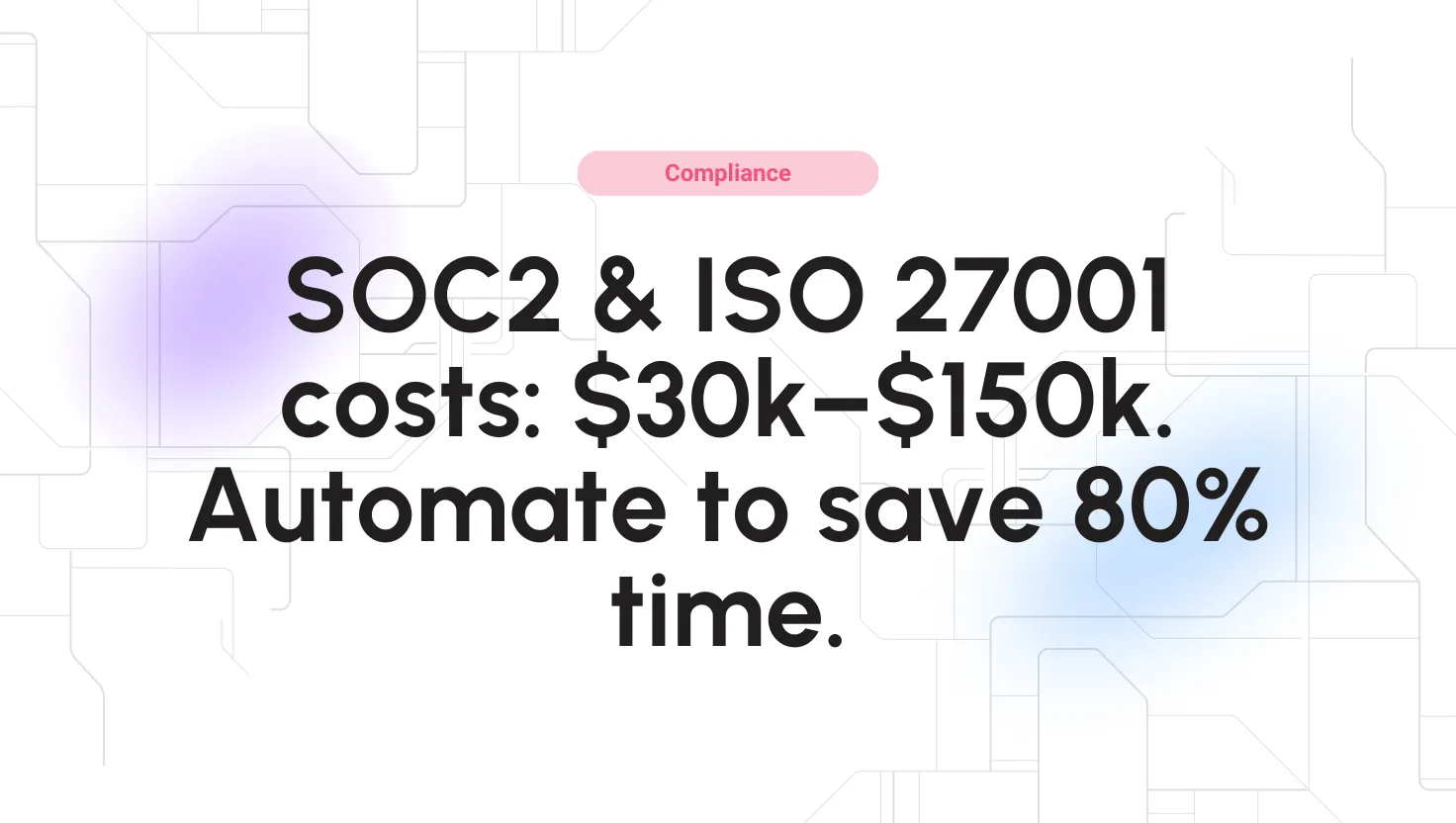
GRC software provides a centralized framework for managing governance policies, assessing organizational risk, and tracking compliance across multiple regulations simultaneously. These platforms are built for organizations that must comply with several frameworks at once – for example, a SaaS company that needs SOC 2 and ISO 27001, or a financial institution managing SOX, OFAC, and PCI DSS requirements. GRC platforms typically include risk registers, control mapping, automated evidence collection, and executive dashboards. Pricing for enterprise GRC tools ranges from $20,000 to $150,000+ per year depending on scope and user count.
Data Privacy Compliance Tools
Data privacy compliance software helps organizations meet the requirements of regulations like GDPR, CCPA, LGPD, and other regional data protection laws. These tools handle consent management, data subject access requests (DSARs), cookie compliance, data mapping, and privacy impact assessments. Platforms like Cookiebot and Clym specialize in this area, providing automated cookie scanning and consent banners alongside compliance documentation.
Healthcare Compliance Software
HIPAA compliance software addresses the specific requirements of the Health Insurance Portability and Accountability Act, including patient data protection, access controls, breach notification workflows, and audit trails for protected health information (PHI). Healthcare organizations also use compliance tools to manage accreditation standards from bodies like the Joint Commission and CMS Conditions of Participation.
Financial and Tax Compliance Tools
Financial compliance software covers regulations like SOX (Sarbanes-Oxley), AML (Anti-Money Laundering), KYC (Know Your Customer), and OFAC sanctions screening. These tools verify identities, screen transactions against watchlists, and maintain audit trails for regulatory examinations. Tools like TINCheck combine IRS TIN matching with OFAC screening and global watchlist verification in a single platform, with plans starting at $19.95 per month.
Cybersecurity Compliance Platforms
Cybersecurity compliance tools automate the process of achieving and maintaining certifications like SOC 2, ISO 27001, PCI DSS, and the newer CMMC (Cybersecurity Maturity Model Certification) for defense contractors. These platforms continuously monitor your technical infrastructure, collect evidence from cloud services and security tools, and map findings against control frameworks. Secureframe, Vanta, and Drata are among the most recognized platforms in this space, along with Tekpon-reviewed tools like Copla and Scytale.
How to Choose the Right Compliance Software
Selecting compliance software is not just a feature comparison – it requires matching the tool to your regulatory obligations, team structure, and growth trajectory. The average cost of a compliance incident reached $14.82 million in recent studies, a 45% increase over the past decade. Choosing the wrong tool – or none at all – carries real financial risk.
Start with Your Regulatory Requirements
List every regulation, framework, and standard your organization must comply with. A healthcare provider managing HIPAA and state privacy laws needs different capabilities than a fintech startup pursuing SOC 2 and PCI DSS. Some tools specialize in one domain, while GRC platforms cover multiple frameworks. If you are managing three or more frameworks, a multi-framework platform will save time and reduce duplication.
Evaluate Automation Depth
The gap between manual compliance management and automated compliance software is substantial. Compliance automation software can reduce audit preparation time by 50-70% by continuously collecting evidence, monitoring controls, and flagging gaps. Look for platforms that offer automated evidence collection from your existing cloud infrastructure (AWS, Azure, GCP), identity providers, and security tools. Over 50% of large enterprises now use AI for continuous compliance monitoring, and this percentage is growing rapidly.
Consider Integration and API Access
Compliance software is most effective when it connects to your existing tech stack. Check whether the platform integrates with your cloud providers, HR systems, identity management tools, project management software, and accounting software. API access matters for larger organizations that need to build custom workflows or feed compliance data into internal dashboards.
Assess Scalability and Pricing Model
Compliance costs scale with organizational complexity. A startup pursuing its first SOC 2 certification has different needs than a multinational managing 15 regulatory frameworks across multiple jurisdictions. Look at how pricing scales – per user, per framework, flat rate, or usage-based. Factor in implementation costs, which can range from $50,000 to $500,000 for enterprise GRC platforms. For smaller organizations, tools like Sprinto and Thoropass offer more accessible entry points.
Key Features to Look for in Compliance Software
Not every compliance tool needs every feature. The features that matter most depend on your industry, your regulatory landscape, and how your compliance team operates. That said, the features below separate effective compliance management systems from tools that create more work than they eliminate.
- Automated Evidence Collection: Pulls compliance evidence directly from your cloud infrastructure, security tools, and business systems without manual effort. This is the single most time-saving feature for audit preparation.
- Control Mapping Across Frameworks: Maps a single control to multiple regulatory frameworks simultaneously. If you implement one access control policy, the software should automatically apply it to SOC 2, ISO 27001, and HIPAA requirements at once.
- Continuous Monitoring and Alerts: Tracks your compliance posture in real time rather than relying on periodic manual reviews. Alerts when controls fail, configurations drift, or new risks emerge.
- Risk Assessment and Scoring: Quantifies risks by likelihood and impact, prioritizes remediation efforts, and maintains a risk register that auditors can review.
- Audit Management: Manages the entire audit lifecycle from planning through evidence submission and finding remediation. Includes auditor collaboration features and evidence vaults.
- Policy and Document Management: Stores, versions, and distributes compliance policies. Tracks employee acknowledgments and automates policy review cycles.
- Vendor and Third-Party Risk Management: Assesses the compliance posture of your vendors and partners. Sends security questionnaires, tracks responses, and flags risks in your supply chain.
- Training and Awareness Tracking: Delivers compliance training to employees, tracks completion rates, and documents participation for audit purposes.
- Reporting and Dashboards: Provides executive-level visibility into compliance status, risk trends, and audit readiness. Exportable reports for board presentations and regulatory submissions.
- Consent and Privacy Management: For organizations subject to GDPR, CCPA, or similar laws – manages user consent, processes data subject requests, and documents lawful processing bases.
Compliance Software Pricing – What to Expect
Compliance software pricing varies dramatically based on the type of tool, your organization’s size, and the number of frameworks you need to manage. Understanding the typical price ranges helps you budget realistically and avoid sticker shock during procurement.
Entry-level compliance tools focused on a single domain – such as cookie consent management or basic policy tracking – often start between $10 and $100 per month. Mid-market compliance automation platforms designed for SOC 2 or ISO 27001 readiness typically range from $500 to $2,500 per month, depending on the number of employees and integrations.
Enterprise GRC platforms that manage multiple frameworks, large user bases, and complex organizational structures run from $20,000 to over $150,000 per year. Implementation costs add another $50,000 to $500,000 depending on customization requirements. Specialized compliance tools for financial services (AML, KYC, OFAC screening) have their own pricing models, often based on transaction or verification volume rather than seat count.
Many compliance platforms do not publish pricing publicly and require a sales conversation. When evaluating cost, factor in the total cost of ownership: platform subscription, implementation, training, ongoing maintenance, and the internal staff time required to manage the system. Compare pricing across tools in our Vanta pricing review, Clym pricing review, and Copla pricing review for detailed breakdowns.
Compliance Software Trends in 2026
The compliance landscape is shifting faster than at any point in the past decade. Three trends are reshaping how organizations approach compliance management and the tools they use.
AI-Powered Compliance Automation
Global spending on AI governance is projected to reach $2.54 billion in 2026 and grow to $8.23 billion by 2034. AI is moving beyond simple automation into predictive compliance – identifying potential violations before they occur, analyzing regulatory changes for impact, and generating audit-ready documentation from raw data. The EU AI Act, which took effect in stages starting in 2025, is also creating a new compliance domain that requires its own tooling for AI system auditability and risk classification.
Continuous Compliance Replacing Point-in-Time Audits
The traditional model of preparing for annual audits is giving way to continuous compliance monitoring. Instead of scrambling to collect evidence once a year, organizations maintain real-time compliance dashboards that track control effectiveness continuously. This shift benefits both the organization (fewer surprises during audits) and auditors (ongoing evidence stream). Platforms that support continuous compliance are becoming the standard expectation rather than a premium feature.
Expanding Regulatory Scope
New regulations continue to increase compliance complexity. The EU’s DORA (Digital Operational Resilience Act) for financial services, NIS2 Directive for cybersecurity, and CSRD for sustainability reporting all took effect or expanded in 2025-2026. In the US, state-level privacy laws continue to proliferate – over 15 states now have comprehensive privacy legislation. For compliance teams, this means managing more frameworks simultaneously, which drives demand for multi-framework cloud security and GRC platforms.
Compliance Software for Small Businesses vs Enterprise
The right compliance tool depends heavily on your organization’s size and complexity. A 15-person startup pursuing its first SOC 2 has fundamentally different needs than a 5,000-person company managing compliance across 20 jurisdictions.
Small Businesses and Startups
Small businesses typically need compliance software that is affordable, quick to implement, and focused on one or two frameworks. For data privacy (GDPR, CCPA), tools like Termly offer free tiers with basic cookie consent and policy generation. For SOC 2 or ISO 27001 readiness, platforms like Sprinto, Scytale, and Thoropass provide guided workflows that walk you through the certification process without requiring a dedicated compliance team. Most small business compliance tools cost under $1,000 per month.
Mid-Market Companies
Mid-market organizations managing two to five frameworks benefit from compliance automation platforms that offer cross-framework control mapping, automated evidence collection, and integration with their growing tech stack. At this stage, vendor risk management and employee training modules become important additions. Expect to pay $1,000 to $5,000 per month for platforms that balance depth with usability.
Enterprise Organizations
Enterprise compliance requires multi-framework GRC platforms with support for custom frameworks, complex organizational hierarchies, role-based access controls, and dedicated customer success teams. Enterprise tools must integrate across hundreds of systems and support compliance programs spanning multiple business units and geographies. Thomson Reuters, ServiceNow, and similar platforms serve this segment, with annual costs starting at $50,000 and scaling significantly from there.
The Cost of Non-Compliance
Understanding what non-compliance costs puts software pricing in perspective. The average compliance incident now costs organizations $14.82 million when accounting for fines, litigation, remediation, and business disruption – a 45% increase over the past decade.
European data protection regulators imposed over $4.48 billion in GDPR fines in 2025 alone. OFAC sanctions violations can reach millions of dollars per infraction under the International Emergency Economic Powers Act. Even smaller penalties add up: the IRS charges $60 to $310 per incorrect information return when TIN mismatches go uncaught, which can total hundreds of thousands for organizations filing large volumes of 1099s.
Beyond direct fines, non-compliance creates indirect costs: lost customer trust, revenue declines of 15-25%, shareholder value drops exceeding 30%, and remediation efforts that can consume up to 25% of annual revenue. For most organizations, the annual cost of compliance software is a fraction of what a single compliance failure would cost.
Compliance Software FAQ
The best compliance software depends on your industry and the regulations you need to address. For data privacy and cookie consent, Cookiebot and Clym are top-rated on Tekpon. For SOC 2 and ISO 27001 automation, Vanta, Secureframe, and Copla lead the category. For financial compliance including OFAC screening and TIN matching, TINCheck by Sovos offers transparent pricing starting at $19.95 per month.
Compliance software pricing ranges from free (basic consent tools like Termly) to over $150,000 per year for enterprise GRC platforms. Most mid-market compliance automation tools cost between $500 and $2,500 per month. Specialized tools like OFAC screening or TIN verification platforms often use volume-based pricing rather than per-seat models. Implementation costs for enterprise deployments can add $50,000 to $500,000 on top of the subscription.
Yes. Several compliance tools offer free tiers or free plans with limited functionality. Termly provides free cookie consent and policy generation for small websites. The IRS offers a free TIN matching program with limited interactive checks. OFAC provides a free sanctions search tool at sanctionssearch.ofac.treas.gov. For more comprehensive compliance management, most platforms require a paid subscription.
Compliance software typically focuses on meeting specific regulatory requirements – tracking obligations, collecting evidence, and preparing for audits within defined frameworks. GRC (Governance, Risk, and Compliance) software takes a broader approach, adding governance policy management and enterprise risk assessment on top of compliance tracking. GRC platforms are designed for organizations that need to manage risk holistically across the business, not just check regulatory boxes.
Most compliance platforms cover common frameworks including SOC 2, ISO 27001, GDPR, HIPAA, PCI DSS, and CCPA. Enterprise platforms extend to SOX, CMMC, FedRAMP, NIST CSF, and industry-specific regulations like DORA for financial services and NIS2 for critical infrastructure. Some tools specialize in a single domain – for example, OFAC screening tools focus exclusively on sanctions compliance, while consent management platforms focus on data privacy laws.
Compliance software streamlines audits by continuously collecting evidence, maintaining organized documentation, and mapping controls to framework requirements. During an audit, the platform provides a central evidence vault where auditors can review policies, access logs, configuration screenshots, and control test results. This replaces the traditional approach of scrambling to gather documents manually, which can take weeks. Many platforms also support direct auditor collaboration, allowing external auditors to access relevant evidence through a secure portal.
It depends on your regulatory obligations. If your business handles personal data (most do), GDPR or CCPA requirements apply regardless of size. If you serve enterprise customers, they will likely require SOC 2 compliance as part of vendor due diligence. If you process payments, PCI DSS applies. Small businesses can start with affordable, focused tools rather than enterprise GRC platforms. Cookie consent tools, basic policy management, and single-framework automation platforms are all available under $100 per month.
Compliance automation software uses technology to replace manual compliance tasks with automated workflows. Instead of manually taking screenshots of security configurations, tracking policy acknowledgments in spreadsheets, or collecting vendor security questionnaires by email, automation platforms connect directly to your systems and handle these tasks continuously. This reduces human error, cuts audit preparation time by 50-70%, and enables continuous compliance monitoring rather than periodic point-in-time checks.
About the Authors
Writer
Cristiana Trifu
Copywriter @ UM Worldwide
SaaS Content Writer
Cristiana Trifu is a talented and versatile copywriter who helps create brand narratives at Universal McCann. With a keen eye for detail and a knack for crafting compelling messages, Cristiana has quickly contributed significantly to various high-impact marketing campaigns.