Remember when marketing automation meant setting up a few email sequences and calling it a day? Those days are over. AI isn’t just optimizing the old ways it’s flipping the script entirely. We’re talking about systems that don’t just follow rules but learn, adapt, and even make decisions on the fly.
But here’s the thing: AI doesn’t play favorites. It doesn’t care if your strategy is brilliant or half-baked it will scale whatever you give it. That means the gap between the teams who get it and those who don’t is widening fast.
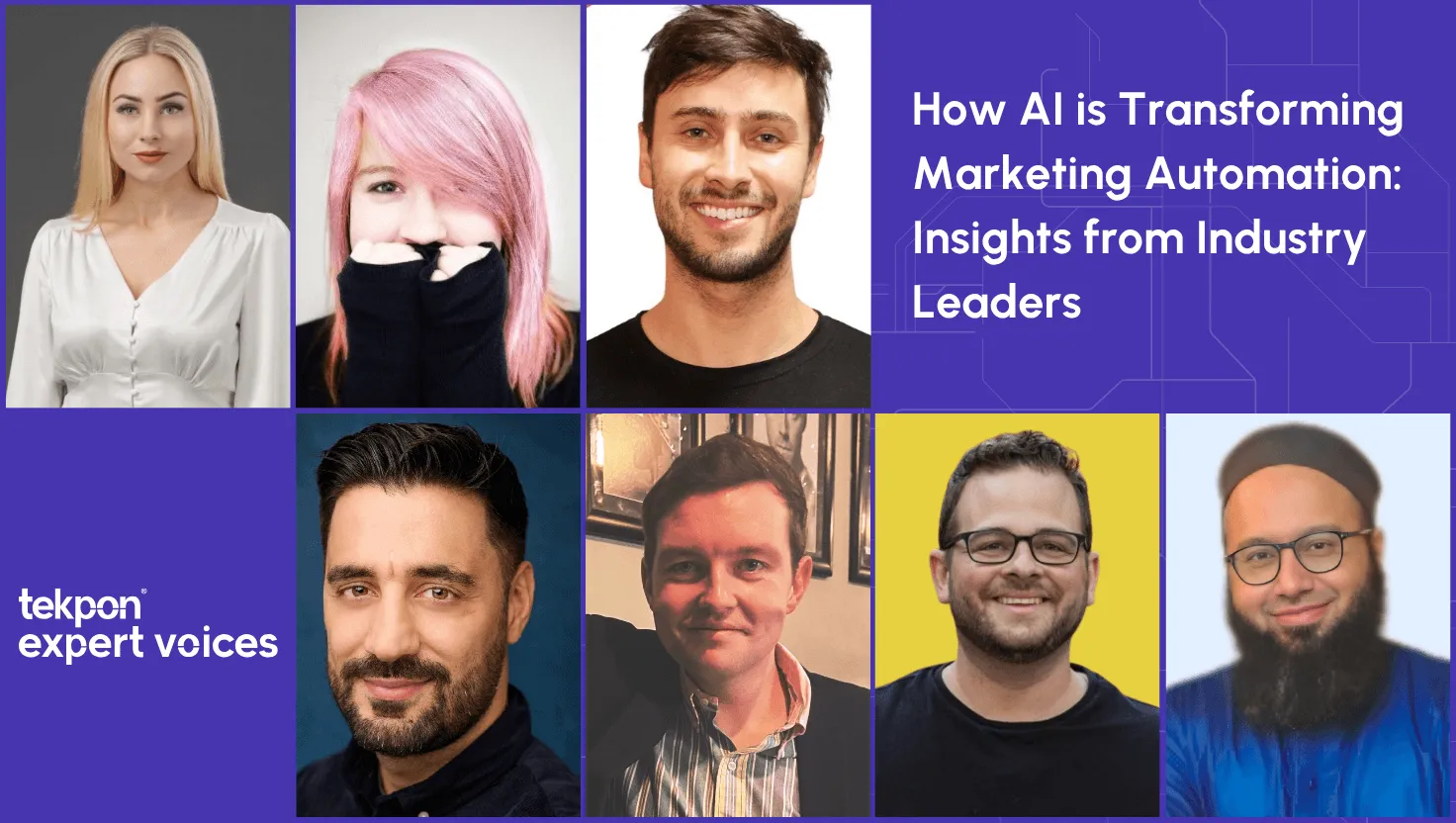
So we asked seven sharp, in-the-trenches marketers: How is AI really changing the game in 2026? Their answers might just change how you think about your next campaign.
From Automation to Autonomy: AI as the Next Frontier in Marketing
Marketing automation is evolving from rigid workflows to autonomous, AI-driven systems that interpret real-time signals and optimize engagement. Tuna Baysal emphasizes the shift toward agentic intelligence, where data unification is the key to unlocking AI’s full potential.

The future of marketing automation is not automation at all, it is autonomy. As AI evolves, marketing systems are shifting from executing predefined workflows to orchestrating engagement through agentic intelligence that can interpret buying signals, make real-time decisions, and continuously optimize how organizations go to market.
Traditionally, automation helped scale campaigns through nurturing flows, scoring models, and scheduled outreach. Today, AI is transforming these systems into adaptive orchestration layers designed for complex, non-linear buying journeys, particularly in B2B environments where multiple stakeholders shape decisions.
We are now seeing the early emergence of agentic systems in marketing that not only support decisions but increasingly act on them, from prioritizing opportunities to dynamically adjusting messaging and resource allocation.
However, the main constraint is not technology but data. Fragmented signals across CRM, product, marketing, and sales environments limit the impact of AI-driven automation. Organizations that invest in unified signal architecture will gain a clear advantage.
Ultimately, marketing automation is evolving into intelligent go-to-market systems, built for more autonomous, signal-driven growth.
Success depends on breaking down data silos to enable smarter, self-optimizing marketing.
AI Expands the Solution Space, But Human Creativity Remains Irreplaceable
AI is enabling marketers to analyze deeper, execute faster, and synthesize fragmented data like never before. Yet, the most valuable asset remains human creativity especially for brand voice and narrative.

Marketing automation used to be fundamentally rule-based, like a series of if-else conditions that executed pre-defined workflows. AI has shattered that ceiling and opened up the solution space.
I use tools like n8n, Lindy, and Claude Code in my day-to-day work, and I can now operate at a scale and across a solution space that simply wasn’t imaginable before.
Ex: Processing 100 Gong transcripts to surface patterns across customer conversations, running real-time pre-demo research before a sales rep says hello, building custom BI dashboards in Lovable that surface data exactly the way my team thinks. These aren’t hypotheticals. They’re things I’m doing now.
AI hasn’t just made me faster but also raised the baseline of analysis depth. Im able to synthesize multiple data beds like Ahrefs and GA4, intertwine that and make sense of a previously fragmented picture. It has collapsed entire research and analysis phases that used to consume days. Weeks if you’re working with an agency.
What strikes me most is AI’s ability to make sense of data at volume. I’ve used it to find ICP patterns, distill themes from hundreds of customer signals, and build visualizations without being at the mercy of rigid tools like HubSpot that I’d otherwise have to wrangle into shape. That control, over how intelligence is surfaced and acted upon, is genuinely new.
And the marketer who learns to wire these capabilities together holds a compounding advantage over those who don’t.
That said, I’d be doing a disservice if I didn’t flag the real challenges. Hallucinations happen. AI over-indexes on certain patterns. And if you lean too heavily on generated content without steering it, you end up in a sea of sameness i.e. templated, forgettable, and indistinguishable from everyone else doing the same thing.
That’s where I believe marketers still need to show up with full ownership of voice, narrative, and the creative instinct that gives a brand its edge. AI is excellent at logic, pattern matching, and processing data at volume.
But the seed of novelty, the angle that makes a piece of content actually land – that still has to come from a human. The teams that internalize that division of labor are the ones who will use AI as a genuine force multiplier.
AI excels at logic and scale, but human creativity remains irreplaceable for brand voice and narrative.
Beyond the Funnel: AI Enables Dynamic, Omnichannel Engagement
The traditional marketing funnel is obsolete. AI is powering continuous loops of engagement, where every interaction online or offline feeds back into the system for smarter, more personalized outreach.

I think most companies are still looking at AI in marketing the wrong way.
They treat it as an upgrade, better emails, smarter ads, faster content. Useful, yes. But still built on the same old model. The issue is, that model doesn’t really reflect how people behave anymore.
Customers don’t move in straight lines. They dip in and out. They engage online, disappear offline, reappear through a community or a conversation. The journey is fluid and increasingly, it’s happening across both digital and physical environments.
That’s where AI actually changes things. It allows us to move beyond the idea of a funnel and towards something more dynamic a continuous loop between online and offline. At Allex.ai, especially across the DACH and EMEA markets, that’s exactly how we’re approaching it.
An interaction online isn’t the end goal, it’s a signal. AI helps us interpret that signal and decide what should happen next. Sometimes that’s another digital touchpoint. Sometimes it’s something offline, a curated event, a smaller setting, a more personal interaction. And importantly, it doesn’t stop there. Everything that happens feeds back into the system. So the next interaction is smarter. More relevant. More human. That continuity is where the real value sits. It’s particularly important in the kinds of markets we work in, niche, relationship-driven sectors where trust carries more weight than reach. Historically, those spaces have been difficult to access through digital channels alone.
AI gives us a way in. We can identify smaller, highly relevant communities, understand how they operate, and engage in a way that actually fits their world. Not louder, just smarter. That’s been a big part of how we’ve been able to expand Allex.ai’s reach into areas that weren’t really accessible before and build a community bringing Tech, Innovation and Traditional Industries together. There’s also a knock-on effect when it comes to partnerships. When you have a clearer view of your data and your audience, collaboration becomes much more natural.
Partner marketing stops feeling disjointed and starts becoming aligned, shared audiences, better timing, more meaningful outcomes. In tighter ecosystems, that builds momentum quickly.
But it all comes back to one thing: data. If your data is fragmented, your marketing will be too. AI isn’t a magic fix. it needs a solid
foundation. When your data is clean, connected, and continuously enriched, everything
else becomes easier. You’re not just reacting to what’s happened you’re starting to
anticipate what comes next.
And that’s a very different position to be in. For me, that’s really the shift we’re seeing now. Marketing isn’t about running campaigns and hoping they land. It’s about building systems that learn, adapt, and stay connected across every touchpoint online and offline.
Some businesses are still refining the old model. Others are quietly building something new. And over the next few years, that difference is going to matter a lot.
AI enables marketers to engage more personally and contextually, especially in niche, trust-driven markets.
Eliminating Human Error: AI’s Role in Flawless Execution
Even the best marketing strategies fail due to human inconsistency. AI ensures processes are executed perfectly every time, freeing teams to focus on high-impact decisions.

The best agencies already have the answer: documented processes, proven methodologies, and systems built to deliver consistent, high-quality work. At Chili Digital, that foundation is what has helped hundreds of clients grow across five countries.
But here’s what no agency likes to admit: even the best playbook is only as good as the person executing it that day. One distracted account manager, one new hire who skips steps, one bad apple who ignores the system and a client’s results quietly deteriorate. Not because the strategy was wrong. Because the human was inconsistent.
That’s the gap AI is about to close permanently.
AI doesn’t have bad days. It doesn’t skip the checklist because it’s Friday afternoon. It doesn’t forget to cross-reference the data or miss the anomaly buried in a report. It executes the process every time, at scale, without ego.
The future of marketing automation isn’t about replacing human thinking. It’s about finally making human error optional. The agencies that thrive will be the ones who let AI own the execution layer, and redirect their people toward the one thing that still requires a human: the judgment to know what actually matters for each client’s business.
The future of marketing lies in letting AI handle execution while humans drive high-impact decisions.
Agentic AI: Shifting from Content Generation to Strategic Partnership
2026 marks the rise of Agentic AI, where automation moves beyond content creation to strategic decision-making. The winning formula? Balancing AI’s efficiency with human judgment.

Faye Wood
Digital Marketing Manager
@
Pandrol
2026 has rapidly become known as the year of Agentic AI, marking a shift from simply generating content with AI to truly operating with it. Instead of treating AI as a novelty or a shortcut for drafting emails, marketers and tech leaders are now embracing it as a strategic partner in working smarter, not harder.
One of the biggest changes is the reduction of manual, time‑consuming tasks. The days of pulling analytics by hand, juggling datasets, or building reports from scratch are fading fast. Agentic systems can now automate the static elements of data, collecting, organising, and surfacing raw facts and figures with minimal oversight.
But while AI excels at gathering and structuring information, the interpretation of that information remains inherently human. Marketers understand the nuances of brand voice, customer behaviour, and campaign goals in ways AI cannot fully replicate. The insights, strategic decisions, and creative direction that stem from data are still shaped by human experience and intuition.
Tools like Claude Cowork highlight this new era of automation. These systems can execute tasks more intuitively than ever, streamlining workflows and accelerating productivity. However, this often comes with a trade‑off, such as granting access to local files to enable deeper task automation. As organisations adopt the use of autonomous AI tools, maintaining the right balance between convenience, security, and human judgment becomes essential.
Ultimately, AI isn’t replacing marketers. It’s empowering them. By offloading repetitive processes, AI frees marketing teams to focus on creativity, strategy, and meaningful analysis. The brands that will thrive in this new era are the ones that welcome automation while preserving the human element that gives marketing its power.
Balance AI’s efficiency with human judgment to maintain brand authenticity and strategic depth.
Precision Over Speed: AI’s Double-Edged Sword in Marketing
Many marketers use AI to do the same things faster but the real opportunity lies in intent detection and post-click automation. Success depends on clean data and intentional execution.

Most marketers are using AI to do the same things faster. Write emails faster. Build sequences faster. Score leads faster. That’s not a transformation. That’s efficiency.
The actual shift happening right now is different. AI is changing what marketers can do at all, not just how quickly they can do it.
The old model was built on lists and timing.
Traditional marketing automation was about triggers and sequences. Someone fills out a form, they enter a nurture track. Someone visits a pricing page, sales gets an alert. The system was only as smart as the rules you built into it.
That model still works. But it was designed for a world where you had limited data and no way to make sense of it in real time. You were reacting to signals after they happened.
AI changes the signal layer. The biggest shift I’ve seen across my client engagements is in how AI is changing account selection and intent detection. Tools like 6sense and Bombora are surfacing buying signals before a prospect ever raises their hand. The automation layer now fires not because someone took an action, but because the data says they’re in market.
That changes everything downstream. Your sequences change. Your ad targeting changes. Your BDR outreach changes. The entire motion becomes more precise because the starting point is smarter.
Personalization at scale is no longer aspirational. For a long time, personalization in B2B marketing meant using someone’s first name in a subject line and maybe referencing their company. That was the ceiling.
Now, with AI-powered tools sitting on top of your CRM and MAP, you can serve different website content, different email sequences, and different ad creative based on an account’s industry, size, buying stage, and intent signals, all in real time. I ran a personalization program for one client where we built 14 distinct content paths based on vertical and stage. That would have taken six months to set up manually two years ago. We shipped it in three weeks.
But the failure mode is real. Here’s what I keep seeing: teams adopt AI-powered automation tools and immediately try to automate everything. The output volume goes up. The quality goes down. Prospects start getting sequences that are technically personalized but feel completely robotic.
The irony is that AI makes it easier to scale the wrong message to more people faster. If your ICP is wrong, your positioning is off, or your segments are too broad, AI will just amplify those problems.
The teams winning right now are using AI to do less, not more. They’re being more precise about who they target, more selective about what gets automated, and more intentional about where a human needs to be in the loop.
Where I see the biggest opportunity. The area most B2B marketing teams are underinvesting in is post-click AI. Everyone is focused on using AI to get someone to click. Very few are using it to figure out what happens after.
What content does this account engage with? What’s the right next step based on their behavior? When should a BDR reach out, and with what message? That feedback loop, from click to conversation to pipeline, is where AI can make the biggest difference. And most teams haven’t built it yet.
The honest take. AI is not replacing marketing strategy. It’s making the gap between good strategy and bad strategy wider. Teams with clear ICPs, strong positioning, and clean data are going to scale faster than ever. Teams without those foundations are going to burn budget faster than ever.
The tools are not the advantage. How you use them is.
AI amplifies both good and bad strategies success depends on clean data and intentional execution.
The Scarcity of Original Thinking in an Age of AI Abundance
AI has made execution easier than ever but original thought is now the rarest commodity. The marketers who win will use AI to amplify their unique perspective, not just their output.

Working in marketing both before and after the AI explosion, I’ve realized two things.
First if you’re open and willing to learn, your leverage today is unlike anything we’ve seen before. What used to take weeks, teams, and budget can now be done in hours by one person. The barrier to execution has collapsed, and that’s already transforming how marketing automation works in practice.
Second and this is the part I think many underestimate AI is already good enough to replace large parts of marketing execution. Content, ads, SEO, outbound, even parts of lead generation. That means marketing automation is no longer just about scaling workflows. It’s increasingly about deciding what should happen next with a customer rather than simply triggering predefined campaigns.
We’ve entered a phase where execution is abundant, but original thinking is scarce. And that flips the role of a marketer entirely. The value is no longer in producing more it’s in knowing what’s worth producing in the first place.
The marketers who win now aren’t the ones using AI the most. They’re the ones who think differently, spot opportunities earlier, and use AI as a force multiplier for their perspective and increasingly as a decision layer inside their marketing automation rather than just a production tool.
Because when everyone has access to the same tools, the only unfair advantage left is how you think.
AI levels the playing field your competitive edge is now how you think, not how fast you execute.
AI can crunch data, spot patterns, and execute flawlessly but it can’t think for you. The marketers who stand out in this new era aren’t the ones who automate the most. They’re the ones who use AI to handle the busywork, so they can focus on what machines can’t: creativity, intuition, and real human connection.
The tools are powerful. The data is richer than ever. But at the end of the day, marketing is still about people talking to people. The question isn’t whether you’ll use AI it’s how well you’ll use it to make those connections stronger.