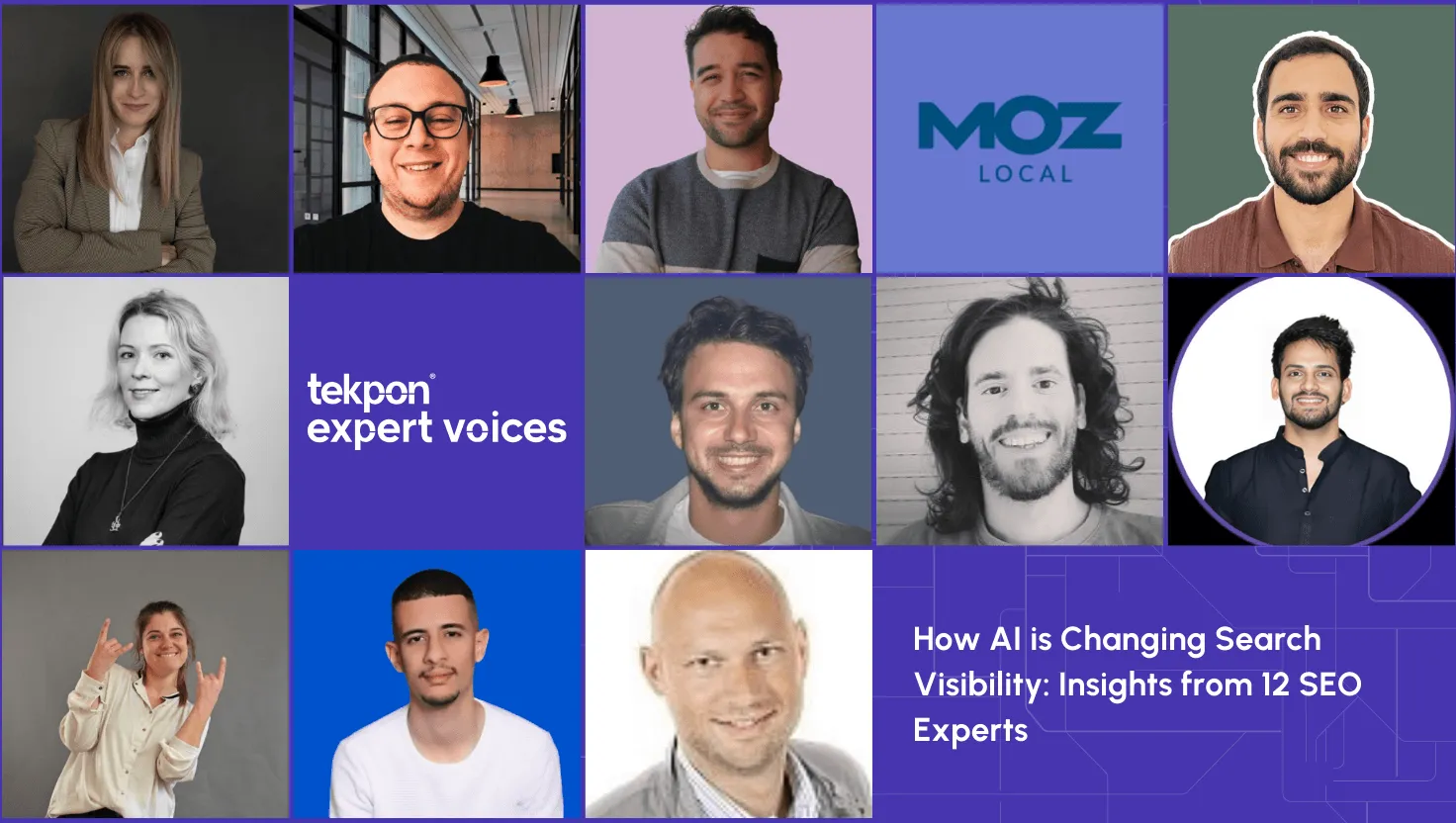
For over a decade, SEO was a predictable game. You researched keywords, built backlinks, optimized meta tags, and chased the top spot on Google’s SERPs. Traffic was the ultimate metric, and rankings were the holy grail. But today, that playbook is obsolete.
The rise of generative AI tools like ChatGPT, Google AI Overviews, Perplexity, and Gemini has fundamentally altered how users discover information. People aren’t just typing fragmented keywords into a search bar anymore. They’re asking full questions, expecting instant summaries, and often getting answers without ever clicking a link. If your content isn’t structured for AI to understand, synthesize, and cite, it might as well not exist.
So what actually works in this new era? We asked three leading experts to share their insights on the strategies driving results today. Their perspectives reveal a clear truth: The future of SEO isn’t about gaming algorithms. It’s about becoming the source AI trusts enough to reference.
SEO Must Adapt to AI-Driven Search Behavior and Workflows
Maria Fleissig argues that the shift from traditional search engines to generative AI tools is fundamentally changing SEO. Users now ask complete questions and expect synthesized answers, forcing businesses to rethink their approach. “SEO is becoming GEO,” she explains, “because search behavior is changing.”

@
HoneyBadger Solutions
SEO is becoming GEO, because search behaviour is changing.
Users are moving beyond traditional search engines and increasingly turning to generative AI tools for answers, summaries, recommendations, and comparisons. Instead of typing fragmented keywords, people are asking complete questions and expecting synthesized responses. That shift alone forces SEO to adapt, and that makes search patterns change, not just on generative AI engines, but on search engines, like Google, too.
As search rapidly shifts toward AI-generated answers, businesses need to start thinking beyond traditional SEO. If you’re not optimizing for how AI systems interpret, summarize, and reference your content, you risk being invisible in the next wave of discovery.
At the same time, the way we do SEO is fundamentally changing. Content creation, keyword research, clustering, and competitive analysis are all becoming AI-powered. We’re using AI to accelerate performance analysis, extract insights faster, and identify opportunities at scale. Workflows are becoming more automated and more efficient.
But automation alone won’t win.
Human oversight will make or break on-page SEO. AI can generate structure and speed, but credibility, differentiation, and brand voice still require strategic direction. Technical SEO remains as critical as ever clean architecture, structured data, and crawlability are what allow both search engines and generative systems to trust your content.
The biggest shift will be in talent. Traditional SEO roles focused on content writing will evolve toward AI prompting, workflow design, and system optimization. Professionals who can architect and manage AI-driven SEO systems will be in high demand, while those who rely solely on manual content production may need to reskill.
Recommendation for business leaders: Invest in AI-powered SEO workflows now and prioritize human oversight for quality, credibility, and technical health. Equip your teams with the skills to manage AI tools effectively the businesses that adapt fastest will define search visibility in the AI era.
She also highlights the evolving role of SEO professionals: “Traditional SEO roles focused on content writing will evolve toward AI prompting, workflow design, and system optimization.” Her recommendation? Invest in AI-powered SEO workflows now and prioritize human oversight for quality and technical health.
AI Search Demands Unique, High-Quality Content That Resonates with Both AI and Audiences
Daisy Shevlin has seen firsthand how AI search is reducing clicks to websites. “Our clicks dropped by 23% in the last six months of 2025,” she shares. But she also sees opportunity: “Generic, samey content will become less and less relevant. AI sets the bar way higher for high-quality content.”

@
Cognism
“SEO can’t be relied upon to be a traffic factory anymore for your website. AI search has complicated the journey from 10 blue links and clicks to mentions in answers and the likelihood that users stay within the platform. We saw the impact of this accelerate last year with the rollout of AI overviews; our clicks reduced by -23% in the last 6 months of 2025. In practice, there’s nothing that can be done to change this; it’s simply a matter of shifting user behaviour.
But these shifts do make it a very exciting time for SEO and now GEO too. For a start, generic, samey content will become less and less relevant. AI sets the bar way higher for high-quality content, especially at the top of the funnel, where SEOs were previously praised by executives for driving large amounts of traffic. Often, without much consideration of whether the traffic was actually relevant, or led to assisted conversions.
Now the focus will shift to relevancy and actually bringing something new to the conversation. We at Cognism were already ahead of this, having many unique content resources such as our demand gen playbook and new proprietary data reports, which we launched last year. We know that Large Language Models (LLMs) love to cite data and draw on expertise to fill in gaps in their own internalised training knowledge. But what’s more, we know that our ideal customer profile will really resonate with content resources like this.”
Her takeaway? Invest in high-quality, data-driven content that fills gaps in AI knowledge and watch your brand become a trusted source.
AI-Driven Search Requires a Shift from Indexing to Recommendation and Conversational Discovery
Catalina Borș highlights that the customer journey no longer begins exclusively on Google or social media. Instead, users are embracing Conversational Discovery, seeking direct answers from AI assistants. “The way people discover brands is increasingly dominated by direct queries posed to AI assistants,” she explains.

@
Roweb Media
In today’s digital landscape, we are witnessing an unprecedented paradigm shift. Until recently, the customer journey began almost invariably on Google or Social Media. Today, we are seeing the birth of a new funnel: Conversational Discovery. Users are no longer just looking for links; they are seeking direct answers. This shift is fundamentally rewriting the rules of online visibility.
The way people discover brands is increasingly dominated by direct queries posed to AI assistants. Instead of manually comparing a dozen websites, consumers now ask: “Which skincare brands are safe for sensitive skin?” or “What are better alternatives to Brand X?”
AI synthesizes information from across the web to provide a few curated options. At that moment, a significant portion of the decision-making process is already complete. For eCommerce, competition is no longer just about winning the click, it’s about the honor of being included in the AI-generated response.
AI does not prioritize ad budgets, nor does it artificially promote products. Large Language Models rely on aggregated web signals to understand brands as entities. Without SEO, that context is missing, rendering a brand invisible to the algorithms.
To be recommended, a brand must maintain a clear public positioning that answers critical questions: What problem does it solve? Who is it for? What makes it different?
To remain relevant in this new ecosystem, I have defined seven strategic pillars that every brand must address.
AI relies heavily on third-party validation, prioritizing the internet’s collective consensus over a brand’s self-published claims.
Focus on mentions in niche publications, founder interviews, and inclusion in independent “top lists” or comparisons.
External validation is the fuel for AI recommendations.
AI reads information structures to understand contextual relevance. Your website must be organized not just by product categories, but by needs and specific use cases.
Structures like “For road running” or “Office solutions” help AI associate your brand with the concrete search scenarios of your users.
Beyond aesthetics, your homepage serves as your brand’s identity card for AI crawlers. It must unequivocally explain who you are, what you sell, and who your target audience is.
Vague or exclusively visual messaging drastically reduces the model’s chances of semantic understanding.
The footer functions as a strategic summary. Utilizing it to include main categories, FAQ pages, guides, and clear business context provides AI with a logical structure to index quickly. It is a high-value area for information hierarchy.
A static site is perceived by AI as having low relevance. Conversational search engines favor active sources.
Regularly review evergreen guides, expand category descriptions with rich details, and update FAQ sections based on real customer inquiries.
AI aggregates information from diverse sources. The same topic should exist as text, video, audio (podcasts), and explanatory images.
Each format creates a new public reference point that bolsters brand authority in the eyes of the algorithm.
Inconsistency creates semantic confusion. Your brand description and differentiators must be conceptually identical across your website, social media, PR, and marketplaces.
A unified voice allows AI to categorize you correctly and recommend you with confidence.
The transition toward an AI-influenced digital environment does not signal the end of SEO; rather, it marks its definitive maturation. We have moved past the era of technical “hacks” and keyword stuffing into an age where authority and semantic clarity are the only currencies that matter.
In 2026, success depends on a brand’s ability to project a coherent, validated image across the entire web ecosystem. AI acts as a trust synthesizer. It won’t recommend a product simply because it exists, but because it understands, based on external signals and internal site structure, that the brand is the optimal solution for a specific need.
The brands that will dominate the market are not necessarily those with the largest ad budgets, but those that successfully become authoritative educational resources.
The challenge for marketers is now twofold: they must build impeccable experiences for human users (UX) while simultaneously providing a digestible data architecture for AI engines.
Ultimately, SEO in the AI era is about your total digital footprint. If you want AI to talk about you, you must first ensure the rest of the internet is already doing so in a clear, structured, and relevant way.
The future belongs to brands that don’t just appear in searches, but are chosen by algorithms as the most reliable recommendation for the user.
Her conclusion? “The future belongs to brands that don’t just appear in searches, but are chosen by algorithms as the most reliable recommendation for the user.”
AI is a Strategic Partner for SEO Professionals, Not a Replacement
Patrik Rojan argues that AI is not killing SEO it’s transforming it. “The real question today is no longer ‘How do we rank higher on Google?’ but rather ‘How do we remain visible in an ecosystem?’” he states.

@
Search Evolution Summit
For years, SEO professionals have heard the same prediction: “SEO is dying.” Yet every time the industry evolves, SEO adapts and becomes even more strategic. The rise of AI is simply the latest and fastest transformation.
The real question today is no longer “How do we rank higher on Google?” but rather “How do we remain visible in an ecosystem?”
AI systems like ChatGPT, Gemini, and Perplexity are changing how people access information. Instead of presenting users with a list of links, they increasingly provide direct answers. This shift may reduce traditional click-through traffic, but it does not eliminate the need for high-quality content.
In fact, AI systems still rely on the open web as their primary source of information. This means SEO is evolving from simply optimizing pages to building credible digital authority.
One of the biggest risks today is the explosion of AI-generated content. While AI tools make content creation easier, publishing large amounts of unedited or low-quality AI content can quickly damage a website’s visibility.
The core principle of SEO remains unchanged: quality and uniqueness matter. Content created for real users, backed by expertise and credibility, will always outperform content created only for algorithms.
AI does not replace SEO professionals. Instead, it gives them a new role: those who learn to use AI strategically will treat it not as a competitor, but as a powerful partner.
Patrick’s insight underscores a critical shift AI is a tool, not a threat. The future of SEO belongs to professionals who leverage AI to enhance their strategies while maintaining a focus on quality, credibility, and human expertise.
SEO Fundamentals Remain the Foundation for AI Visibility
Cătălin Costache believes that AI tools are essential for SEO but won’t replace human expertise. “Strategy, research, and implementation are crucial to the success of an SEO campaign, and this cannot be done by AI,” he asserts.

AI-based tools are essential in SEO at this point. They do not replace the specialists behind the desk, but help them complete repetitive tasks faster.
Strategy, research, and implementation are crucial to the success of an SEO campaign, and this cannot be done by AI, at least not to the extent that a specialist can. We won’t reach a point where AI completely replaces the SEO specialist. When competitors depend on AI, the differentiating factor will be humanity.
As for claims that AEO/GEO/AIO and so on will replace SEO, my opinion is that they are premature. At its core, SEO is a set of best practices to help bots crawl (technical SEO), understand what information is on the page (on-page SEO), and build a good reputation for the business (off-page SEO).
With minor methodological differences, such as AI bots crawling in chunks of about 350 words, the implementation of the same set of best practices will also yield AI visibility. If you win in SEO, you win in GEO.
Catalin’s perspective is a reminder that SEO fundamentals are timeless. While AI can streamline processes, the core principles of technical optimization, content relevance, and human oversight remain the bedrock of visibility whether for traditional search or AI-driven discovery.
SEO Must Evolve to Capture Fragmented Search Journeys Across Multiple Platforms
Stanislav Baciu observes that users are increasingly starting their search journeys with AI tools and continuing on platforms like TikTok, Reddit, and YouTube. “Google will stop being the default starting point,” he predicts.

@
Webify.io
We’re experiencing the biggest shift in how people search for information since Google launched. Even before ChatGPT, users were already migrating: searching TikTok for recipes, appending “Reddit” to Google queries, turning to YouTube for answers. With mass AI adoption, this fragmentation has accelerated.
I’m fairly certain Google will stop being the default starting point. Instead, people will use AI to begin their search journey, then continue on whatever platform fits their intent best.Does this mean SEO is dead? No, it’s more alive than ever. SEO is Search Engine Optimization, not Google Optimization. As long as people search for information online, brands need experts to capture that organic demand.
The shift for brands is clear: stop fixating on Google clicks alone. Map where your audience actually searches, match content to the expected medium (video, podcast, infographic, long-form article), and think multi-modal visibility, not just rankings.
Stanislav’s insight highlights the need for omnichannel visibility. Brands must expand beyond Google and optimize for the platforms where their audiences actually spend time whether that’s TikTok, Reddit, or AI assistants.
Brand Authority in AI Search Requires Consistent, Multidimensional Signals

@
SmartClick
SEO in the Age of AI: A New Dimension
SEO used to be simple. You picked a keyword, optimized a page, and matched one intent. That era is over.
Modern SEO is multidimensional. When someone searches today, they are not just typing a query. They are coming with a situation, a location, a level of urgency, a budget constraint, a specific use case. The same problem looks completely different depending on who is asking and why. Good SEO now has to account for all of that at once.
Search itself has changed too. It is no longer query-based. It is conversation-based. People are asking AI tools full questions and expecting full answers. And those AI tools are not pulling from one trusted source. They are looking for consistent patterns across multiple platforms and environments. If your brand only shows up in one place, you are invisible to that process.
This is why brand authority has shifted. It is not built by ranking number one for a keyword anymore. It is built when your brand keeps showing up, across different contexts, for the same problem. A YouTube walkthrough, a Reddit thread, a well-structured blog post, a video testimonial, a solid internal linking structure. Each one adds a signal. Together they create trust.
And none of this works without a strong traditional SEO foundation. Fast pages, clean site structure, solid on-page fundamentals. That part has not changed. It is just no longer enough on its own.
The brands that will win in AI-driven search are not the ones with the most backlinks. They are the ones that have built a recognizable, consistent presence across the places where their audience actually lives.
Stojan’s approach reinforces that consistency is key. Brands must ensure their messaging, expertise, and value proposition are uniform across all platforms from their website to social media to build the trust AI systems need to recommend them.
SEO and GEO Are Complementary Layers in the AI Era`
Maria del Mar Vázquez Rodríguez compares the evolution of SEO to the adaptation of radio after the advent of television. “SEO is still the foundation of online discovery,” she asserts. “GEO is simply the next layer, focusing on making sure your brand and expertise appear inside AI-generated responses.”

@
FLEXECHARGE
When television sets began appearing in living rooms in the late 1940s and 1950s, many experts, advertisers, and the general public predicted the imminent death of radio. Instead, radio adapted and found new formats, audiences, and purposes.
The same conversation is happening today with SEO. Many experts say SEO is dying because of AI, but that view misunderstands how the web ecosystem works.
So, I think that SEO is still the foundation of online discovery. It’s where most web visibility comes from, and it’s also the ecosystem AI systems rely on when generating answers. GEO (Generative Engine Optimization) is simply the next layer, focusing on making sure your brand and expertise appear inside AI-generated responses from tools like ChatGPT, Gemini, or Google AI Overviews.
Here are the GEO tactics I believe companies should start prioritizing:
Build strong topical authority by publishing consistent, high-quality content around your main expertise so AI systems associate your brand with specific topics.
Structure content for extractability, using clear headings, concise explanations, and direct answers that generative systems can easily summarize or quote.
Strengthen brand signals across the web through mentions, digital PR, expert quotes, and partnerships so your brand appears in the sources AI models learn from.
Close information gaps about your brand or products by making sure accurate, up-to-date information exists online and across multiple trusted sites.
Actively monitor and measure AI visibility by testing prompts in AI assistants, tracking whether your brand is cited in AI answers, analyzing referral traffic from LLMs, and monitoring brand mentions in AI-generated responses.
The companies that will win are the ones that keep strong SEO fundamentals while learning how to optimize for the AI systems increasingly shaping how people discover information.
At the same time, this is still an evolving landscape. AI search is developing fast, and the rules are far from settled. The smartest approach is to stay adaptable, keep experimenting, and watch closely how search and discovery evolve over the next few years.
Maria bridges the gap between SEO and GEO, showing that they’re not competing strategies but complementary layers. Success in the AI era requires mastering both: maintaining strong SEO fundamentals while adapting to the demands of generative search.
Search is No Longer Just About Google It’s About Being Everywhere
Andreea Dinu argues that search is no longer confined to Google. “Users expect direct answers instead of lists of websites, and AI-powered assistants are becoming a natural part of how people discover information,” she says.

Why search is no longer just about Google
In the past, SEO has been tied to one simple behavior: people search on Google, and brands compete to appear among the blue links. The model is changing.
Users expect direct answers instead of lists of websites, and AI powered assistants are becoming a natural part of how people discover information, compare products and make decisions. This shift doesn’t mean SEO is disappearing. But it does mean that search is evolving because it happens ‘’everywhere”, not just in traditional search engines.
One of the biggest changes we see today is how people interact with search. Instead of typing short keyword queries and browsing multiple websites, users now ask conversational questions and expect a clear, synthesized response. AI tools summarize information, compare options and even make recommendations.
People use these tools for different reasons. Some rely on AI for research before making a purchase, others for learning or gathering information and others use it as part of their daily work (to write code, draft content, solve technical problems). Regardless of the use case, the impact on search behavior is clear: users expect faster answers and less friction.
This is not only related to AI, but the attention span has gone down in the past years, especially in digital contexts. Scroll era, constant information flow, and everyday stress all contribute to this reality. The conclusion is simple: we need to adapt our marketing strategies.
Brands are still competing for user attention, but the way we capture that attention has changed. Content must remain original and valuable, but the structure of that content matters more than ever. Instead of long blocks of text, information should be organized in a layout that AI systems can easily interpret (often in formats such as Q&A).
AI is not replacing SEO
Despite the growing anxiety that AI will replace SEO, Google remains one of the most used discovery platforms. The difference is that an additional layer has appeared in the user journey.
Users can now begin their discovery process in AI assistants, gathering insights or comparing options before visiting a website. This is why we need GEO (Generative Engine Optimization) optimizing for visibility in AI-generated responses.
Everything brands have done to optimize for Google (strong technical foundation, clear website structure, high-quality content) remains essential. GEO does not replace SEO, it builds on top of it.
Make sure the website allows AI systems to access and read the content, implement correctly structured data and offer a clear overview of the brand on your own website first of all (what products or services you offer, who is the client, what differentiates your products from alternatives). And go beyond that. The clearer your digital footprint is, the easier it becomes for AI to interpret and recommend a brand.
What others say about your brand matters
Just like backlinks have always been important for SEO, LLMs look for external mentions across the web. Reviews, discussions, and recommendations in neutral environments contribute to how trustworthy a brand appears. Reddit, Wikipedia, forums and Youtube are platforms AI frequently relies on to generate responses. Visibility today is no longer limited to ranking in search results. Brands need to build a strong presence across the broader digital ecosystem
At its core, both SEO and GEO aim to achieve the same goal: satisfying user intent with relevant answers. Because of this, high-quality content is still king, but the bar is higher. Brands must demonstrate experience, expertise, authority and trust more than ever. Content should not rely on vague statements or generic explanations. It should include concrete insights, real examples and original perspectives that provide value beyond what already exists online.
In many ways, the dynamic resembles academic publishing: the more a source is cited, referenced, and use by others, the more authoritative it becomes. Authorship is just as important then. Articles written by identifiable experts (with clear bio and proven experience) contribute to credibility. Pages that were often overlooked in the past, such as “About us” or “Contact”, now need to be at the top of your priority list when it comes to optimization. These sections act as a brand’s digital identity card.
Can AI replace human creativity, know-how and tailored strategies?
While AI is a powerful tool, it still has significant limitations. Don’t ask it why ,,cheese is not sticking on pizza” or you will be told to “add glue to the sauce to give it more tackiness”.
It can help automate tasks, accelerate research, and increase operational efficiency. But creativity, strategic thinking and domain expertise remain for now fundamentally human strengths. AI depends on reliable sources from which it can gather and synthesize knowledge.
From my experience, the most effective approach combines AI-generated efficiency with human oversight. Ignoring AI means losing efficiency and falling beyond competitors. But relying solely on AI means producing generic content that lacks originality and insight. It is often still quite easy to recognize content that was generated entirely by AI without meaningful human input.
The future of search is already taking shape
Artificial intelligence is not a passing trend. It represents a fundamental shift in how users interact with information online. The rapid adoption of AI tools has already pushed giants like Google to accelerate their own AI-driven developments in order to maitain market share.
As these technologies continue to evolve, for marketers and SEO professionals, the challenge is not whether to adapt, but how quickly we can adjust our strategies to remain visible wherever search happens.
Andreea’s insight reinforces that brands must optimize for AI assistants and alternative platforms, not just Google.
AI is Expanding Search Beyond Traditional Engines
Marius Calin highlights that search is undergoing its biggest shift since Google’s rise. “Visibility is now defined by whether a source is considered reliable enough to be referenced by AI systems,” he explains.

@
Zitec
Search is undergoing its biggest shift since the rise of Google. For years, SEO largely meant competing for visibility in a list of ten blue links. That model is now changing as AI-driven search is reshaping how people discover information.
One of the clearest shifts is the rise of AI-generated answers and zero-click searches.
Search engines increasingly synthesize information directly on the results page, which means users often get answers without visiting a website. As a result, visibility is now defined by more than rankings or traffic. It increasingly depends on whether a source is considered reliable enough to be referenced by AI systems.
At the same time, discovery is expanding beyond traditional search engines. People now look for information across a wider ecosystem that includes AI assistants and alternative platforms. Tools such as ChatGPT and Perplexity are becoming part of daily information searches. Social platforms like TikTok, LinkedIn, and forums like Reddit are also increasingly used as search engines, especially by younger audiences.
In this context, many in the industry now describe this shift as Generative Engine Optimization (GEO). The future of search will likely be less about optimizing for a single platform and more about building authority across a broader information ecosystem.
Our experience with clients from the US market helped us better understand how GEO works before it became mainstream. One aspect we can confirm is that a successful GEO strategy depends on multiple trust signals appearing across the web.
Websites will remain important because they are still the primary source of structured knowledge that search engines and AI models rely on. However, visibility will increasingly depend on how consistently a brand’s information appears across search engines, AI systems, knowledge graphs, and social platforms.
SEO is not disappearing. It is expanding.
For SEO professionals, the challenge ahead is learning how to optimize for both people and AI.
Marius’s perspective shows that SEO is evolving into a multi-platform discipline, requiring a broader digital presence.
AI Relies on the Open Web Making SEO More Foundational Than Ever
Davor Karafiloski argues that AI systems still rely on the open web as their primary source of information. “The role of SEO is not disappearing it’s becoming more foundational,” he states.

@
SmartClick
AI is undoubtedly changing how people interact with search. Large language models and AI assistants are introducing more conversational interfaces, in which users ask complex questions and expect synthesized answers rather than a list of links. This changes the search experience, but it doesn’t eliminate the underlying mechanics that power discovery.
Most AI systems still rely heavily on the open web as their primary source of information. They learn from it, reference it, and increasingly surface it in their responses. In that sense, the role of SEO is not disappearing. If anything, it is becoming more foundational.
What is changing is the way visibility manifests. Instead of competing only for traditional rankings, brands are now competing to become trusted sources that AI systems rely on when generating answers. Being cited, referenced, or learned from by these systems adds another layer of visibility on top of traditional search.
At the same time, AI is transforming the operational side of SEO. Lower-risk tasks can now be executed far more efficiently through AI-powered tools and agents. And, as the execution of repetitive tasks becomes increasingly scalable, SEO teams can focus more on the strategic layer of the discipline, where AI has far less influence. Defining the right strategy, generating original insights, and building genuine topical authority still require human judgment and experience, and remain the areas where real differentiation happens.
For this reason, the long-term direction of SEO is less about chasing algorithm changes and more about building durable signals of credibility. Search engines and AI systems ultimately reward the same things: expertise, trustworthy information, and content that genuinely helps users solve problems.
In that sense, the future of SEO may look different on the surface, but its core principle remains unchanged: the web still needs authoritative sources. The brands that become those sources will continue to be discovered, regardless of how the interface evolves.
Davor’s insight underscores that SEO’s core principles authority and credibility are more critical than ever in the AI era.
Easy Organic Traffic is Disappearing Focus on High-Intent Queries
Matija Kolaric notes that AI Overviews and LLM assistants are reducing clicks for informational queries, but high-intent searches (comparisons, reviews, alternatives) still drive traffic.

@
Zebra BI
Matija’s strategy highlights the need to prioritize high-intent content and measure branded search demand as a key metric.
AI is Squeezing Organic Traffic Prioritize What Still Works
Roman Rohoza warns that organic traffic is getting squeezed by AI Overviews, ads, and personalized SERPs. He advises focusing on queries where AI Overviews are absent or have limited impact, such as commercial and high-intent searches.

@
Sitechecker
Roman’s approach is pragmatic: Double down on what still drives traffic and avoid over-optimizing for AI at the expense of core SEO performance.
Good SEO Today Looks Like Good Writing: Clear, Useful, and Respectful of the Reader’s Time
Andra Radu argues that despite the rise of AI, users still search for answers the same way they always have. “The biggest shift isn’t technical it’s about communication,” she says.

@
TestResults
Andra’s insight is a reminder that SEO success still hinges on human-centric content clarity, usefulness, and respect for the audience.
The Future of Team Collaboration Is Human plus AI Agents
Rishi Khanna predicts that team collaboration will increasingly include AI agents as active participants. “The most effective teams will include humans and specialized AI agents working together across functions,” he explains.

@
ISHIR
The Future of Team Collaboration Is Human plus AI Agents
Team collaboration is undergoing a structural shift. For the past two decades collaboration meant people working together through digital tools such as Slack, Zoom, and project management platforms. In the next decade collaboration will increasingly include AI agents as active participants in the workflow.
The most effective teams will no longer consist only of humans. They will include humans and specialized AI agents working together across functions. Engineering teams will collaborate with coding agents. Marketing teams will collaborate with research and content agents. Product teams will collaborate with design and testing agents.
This changes how organizations think about productivity and team structure. Instead of asking how many people a team needs, leaders will start asking how many human experts and how many AI agents are required to achieve the outcome.
The real advantage will come from designing workflows where humans focus on judgment, strategy, and relationships while AI agents handle repetitive analysis, documentation, and operational execution. Companies that intentionally design these human and agent collaborations will move faster and operate with smaller, more capable teams.
The future of collaboration is not humans versus AI. It is humans and AI working together as a unified operating model.
Rishi’s vision highlights that the future of work is collaborative, with humans and AI agents complementing each other’s strengths.
SEO in the Age of AI: Stop Renaming the Problem
Baptiste “Baba” Hausmann argues that GEO is just a new name for an old discipline. “SEO has always been about understanding how buyers ask questions and how platforms process them,” he says.

@
Baba SEO
Baptiste’s approach is a call to focus on real buyer needs rather than chasing trends or acronyms.
Adapt to AI Changes Don’t Panic, Use AI as a Tool
Dan-Constantin Spînu believes that organic traffic will decrease for some websites but grow for others, depending on how they adapt to AI. “The clarity and relevance of content are now more important than ever,” he says.

@
ZUMDOX
From my perspective, the clarity and relevance of content are now more important than ever, and SEO specialists should, if they haven’t already, adapt their strategy and also focus on AEO (Answer Engine Optimization) and GEO (Generative Engine Optimization).
Dan’s message is clear: Adapt to AI changes and use AI as a tool to enhance SEO efforts.
The Shift to Zero-Click Search Means Building Authority Where AI Looks

@
Marketez
We are navigating a landscape of constantly moving pieces in the SEO world right now. With the rise of AI tools, most notably ChatGPT, and the growing share of searches being captured by Google’s AI Overviews and AI Mode, many queries now end in zero clicks, with users getting their answers without ever visiting a website. That shift forced us to rethink our strategies and focus on being mentioned by AI, not just ranked by search engines.
The good news is that, just like Google, AI systems favor brands. At Marketez, brand building has always been central to what we do, so for us this isn’t a reinvention, but rather a strategic shift in how we build that brand presence: moving the focus toward earning mentions from AI systems, increasing citations, and developing topical authority around the subjects that matter to our clients.
In practice, this means doubling down on a few key tactics. First, building deep, structured content around the topics your brand wants to own, genuine topical authority that gives AI systems a reason to associate your brand with a subject. Second, actively growing your presence across third-party platforms through reviews and mentions, since AI pulls from a much wider web of sources than traditional search. And third, digital PR, creating unique, data-driven or insight-led content that authoritative publications actually want to feature. When your brand is consistently referenced across credible sources, AI systems start to reflect that authority in their responses.
Personally, I think this is a positive shift, though I won’t pretend the transition is easy. For many businesses that relied heavily on organic traffic, the zero-click reality is a genuine threat, and adapting takes time and investment. But it pushes specialists like us to be more creative, to think outside the box, and to build strategies through exploration rather than formula. It reminds me of when I started in this industry 15 years ago, we didn’t fully understand how Google’s algorithms worked, so we had to be inventive. There’s something exciting about that uncertainty returning. Yes, a significant shift is underway, but I believe it’s ultimately a good thing.
SEO and GEO Work Together But Search Still Drives Conversions
Vlad-Lucian Jarca cuts through the hype around LLMs with a simple truth: “In 2026, your final acquisitions will still most likely come from Google search, not ChatGPT or Claude referrals.” While AI responses might mention your brand, they’re less likely to include the link that actually starts the conversion journey.

@
ENGIE Romania
SEO & GEO go hand in hand, and we must take advantage of this. Still, we must keep in mind that despite the LLMs hype, there are 2 things that won’t be changing in 2026:
1. It’s much more likely that the final acquisitions that you see in Analytics will be coming from a Google search rather than a ChatGPT or Claude referral, simply because it’s less likely for an LLM’s response to include the link that starts the session where the conversion takes place.
2. You have no guarantee that an LLM’s response will include a link to your website, even if it will mention your brand. Search engines, however, will keep displaying your links in SERPs when your links make it to the first positions, even though they might be less visible than a few years ago due to all the snippets and ads highlighted above it.
GEO comes in to complete classic SEO, not to replace it. Clear, well structured content that answers real questions is the kind of content performs well in both Google SERPs & LLM conversations.
In 2026, the SEO specialist’s objective should be to ensure that the products he’s promoting are both high up in the SERP and being recommended by LLMs when the users enter relevant prompts.
Vlad’s insight is a reality check: Don’t abandon SEO for GEO. The goal is to dominate both ranking in search and being recommended by AI.
Conclusion
This means writing like you’re talking to a real person, not a search engine. It means showing up where actual conversations are happening, not just on your website. It means focusing on the content that actually moves the needle – the stuff that helps people make decisions, not just click links.
The experts all say the same thing in different ways: stop overcomplicating it. Start with one thing. Maybe it’s making your most important page clearer. Maybe it’s finally paying attention to those Reddit threads where your customers hang out. Maybe it’s just talking to your sales team about what questions they’re actually hearing.